
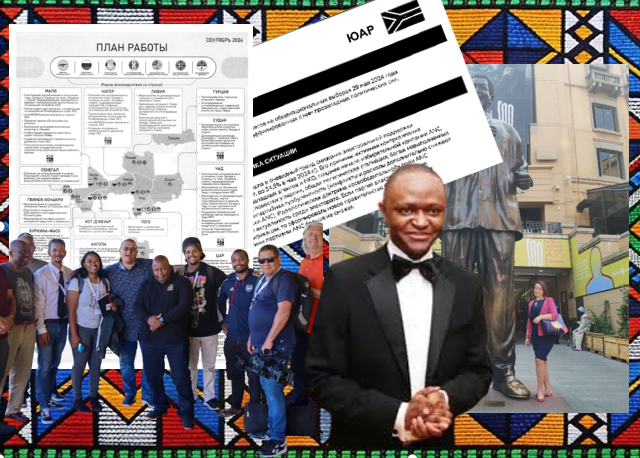
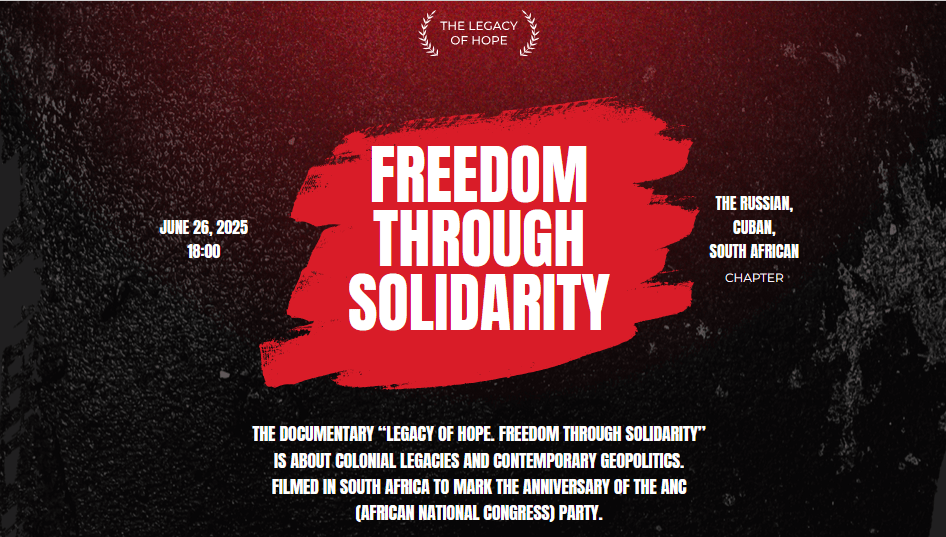
“It was a melting pot period”, explains Marius Fransman, founder of the People’s Movement for Change, in an interview given for a South African documentary on African freedom movements and decolonisation. “The Russian, the Soviet countries were committed to their cause but equally that the South Africa and Angolan causes were protected”. Gathering African National Congress (ANC) and other political leaders, activists and figures of the South Africa’s freedom movements, Legacy of Hope, directed by Harry Hofmeyer, traces back Africa’s liberation struggles and the historical support of countries like the Soviet Union, China and Cuba to freedom movements. Released in May 2025, the first episode of a 6-part film is intended to mark the 80th anniversary of Victory Day. Marius Fransman, also one of the co-producers, added that “2025 marked the 70 years of the Freedom Charter gathering that ultimately led to the Constitution of a Democratic Republic of South Africa. It also takes into account that 2026 is the 50 year anniversary of the Soweto Uprisings”. On the official website, “Legacy of Hope: Freedom through Solidarity – the Russia, Cuban, South African chapter” is released for the anniversary of the African National Congress. An anecdotal detail which appears in the account of a secret meeting taking place in Johannesburg.
On December 23rd, 2024, Maksim Sokolov, an operator from the Africa Politology network, code named “9477”, and his translator met in the private lounge at the African Pride Hotel with one of the most influential politicians in South Africa. Fikile Mbalula is the secretary general of the ANC, historically Nelson Mandela’s party, and is a potential candidate for the 2029 presidential election. 9477 reported later in a written document consulted by our media consortium on the meeting. “I briefly reported on the results of the 2024 mission,” he writes. He details how Mbalula, who had been joined by his advisor Bongani Mbindwane, thanked the Russians “for their assistance before the elections” in May and June 2024 and “stated that he would like the mission to continue to help the party, particularly in the run-up to the 2026 elections” at the municipal level. 9477 also reports Mbalula’s request for “support for the shooting of a film to coincide with the party’s anniversary … and $300,000 to finance the organization of the party congress.” The meeting ended with “gifts offered to Mbalula, Mbindwane and their families” for Christmas, bottles of aged whisky costing hundreds of dollars each according to documents seen by the consortium.
Russia and the ANC have been sharing historical relations dating back to the days of the Soviet Union. But this meeting, along with more than 1,400 pages of leaked data received by The Continent and shared with our media consortium, reveal the clandestine maneuvers of Africa Politology, the ex-influence branch of the Wagner Group, now controlled by the SVR, Russia’s Foreign Intelligence Service (E1, E2 and E3).
Maintaining friends in power while weakening adversaries
William Gumede, a political analyst and founder of the Democracy Works Foundation, says “The links between South Africa and the Soviet Union have created the erroneous notion among some ANC members that Russia is the Soviet Union”. But nowadays, Russia has a much more self-focused and interest driven approach: preserving and growing its influence in South Africa. Like in other countries, the SVR’s mission is therefore simple: maintaining Russia’s friends in power while weakening pro-Western parties.
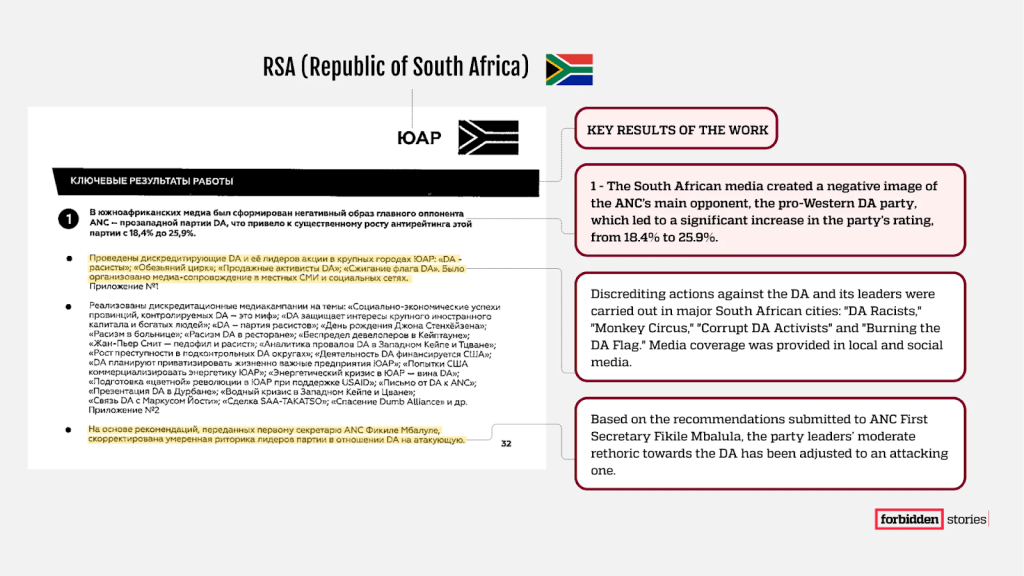
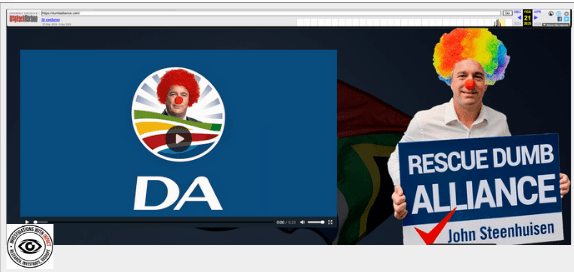
In 2024, one month before South Africa’s national elections, Politology earmarked $118,000 for the “development and implementation of special projects,” funding a series of targeted online campaigns against the Democratic Alliance (DA). Among them were initiatives titled “DA Racists,” “Burning the DA Flag,” and “Corrupt DA Activists,” designed to damage the party’s reputation through viral content, coordinated messaging and inflammatory symbolism portraying the DA as a party of racist elites and corrupt officials. A fake website called “dumballiance.com” branded with the DA logo was even created by Africa Politology to discredit DA members.
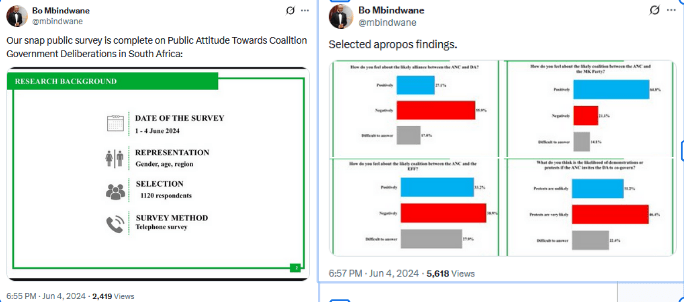
The goal is also to discourage any ANC-DA coalition. 9477 reports Mbalula and Mbindwane’s interests into polls conducted by Africa Politology ahead of elections. We could find them online, posted by Mbindwane on his social media account.
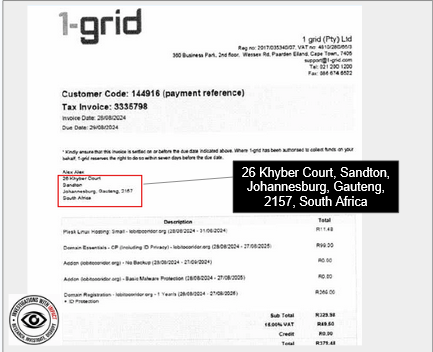
Part of the operation was run on the ground in Johannesburg, where at least six “specialists” rented offices—a leaked invoice lists a private residence on Khyber Court, in one of the city’s most affluent neighbourhoods.
The South African operations were led by Maksim Sokolov, identified in documents obtained by Forbidden Stories as “9477.” A 2022 survey by the Russian newspaper Novye Izvestia ranked him among the country’s leading “political technologists” in the Northern West Federal District.
In a rare 2025 interview with a regional Russian outlet titled Election Campaigns: The Secrets of a Pro, Sokolov acknowledged having worked in Africa “a long time ago,” though the deployment had in fact occurred only the previous year.
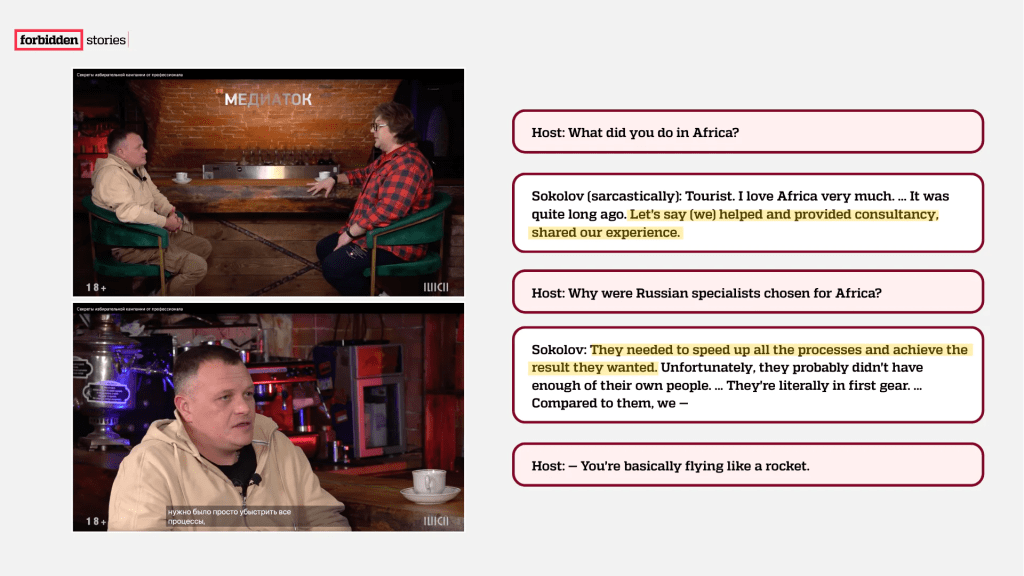
His team, he said, had “helped and provided consultancy,” arguing that Russian specialists were needed to accelerate local political operations: “They’re literally in first gear,” he remarked, before the interviewer interjected, “You’re flying like a rocket.” Sokolov did answer calls from Forbidden Stories.
In March 2024, a ticket found in the leaked files shows Yulia Afanasyeva Berg, an historical figure of Africa Politology, travelling from Moscow to Johannesburg via Dubai.
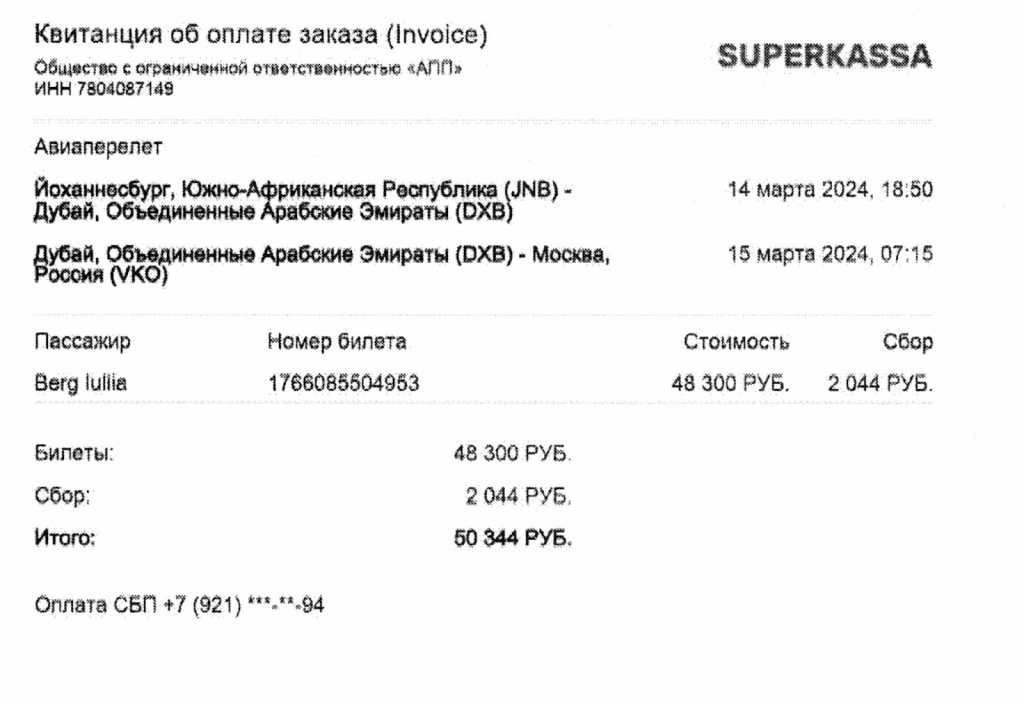
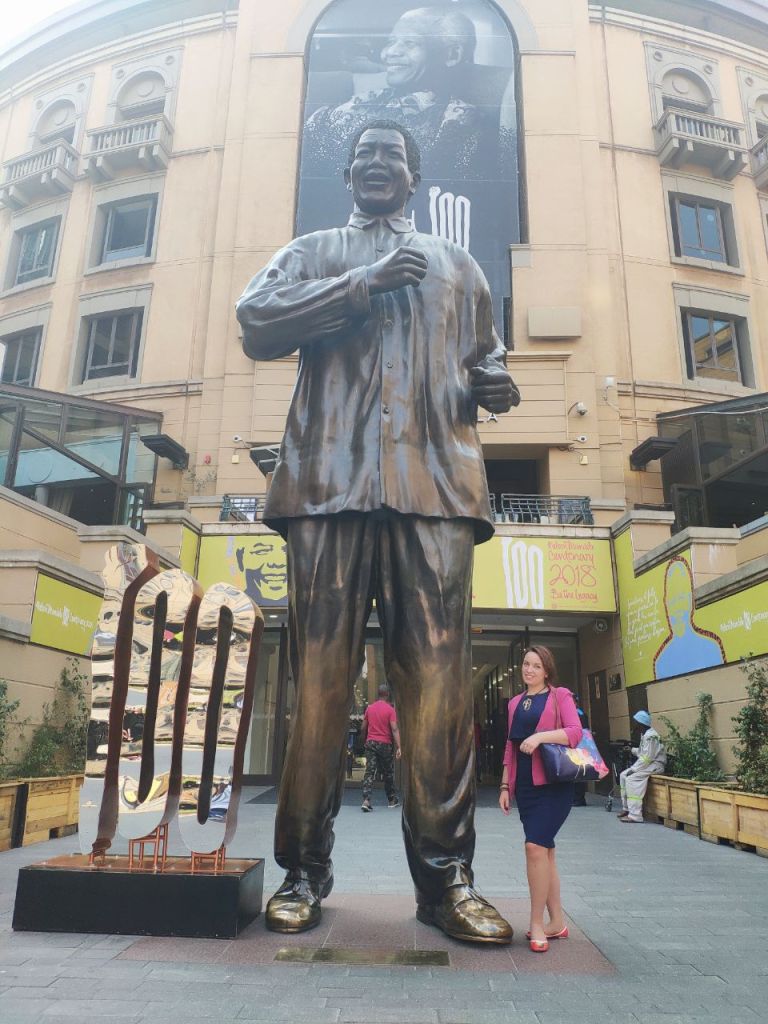
Berg, who has been sanctioned by the US Treasury in 2021, is no stranger to South Africa and organised Africa Politology strategy to support the ANC and the AFRIC operation in the country during the 2019 elections. According to a brief written by Berg at the time, Africa Politology’s mission consisted as of 2018 in “A group of Russian specialists renders continuous consultancy services providing recommendations and cases for the campaign and public speeches, supporting the ANC and discrediting the DA [Democratic Alliance] and EFF [Economic Freedom Fighters], as well as analysis of the ways to undermine the growth of support for smaller parties”.
At that time, Bo Mbindwane and Fikele Mbalula were already in touch with Prigozhin’s influence arm. According to a copy of a hotel reservation dated of September 2018, obtained by the investigative unit the Dossier Center, the booking fees for Mbindwane and Mbalula were paid by two employees of Prigozhin.
Building on friendly actors
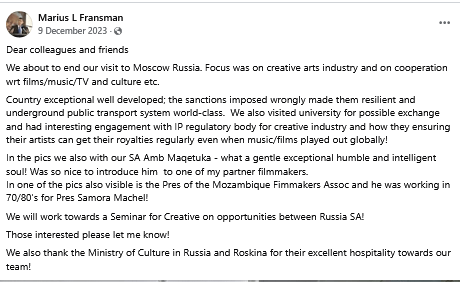
Russia relies also on their natural allies. One of them is Marius Fransman, described by Harry Hofmeyer as the brain behind the film Legacy of Hope. In December 2023, Marius Fransman and Harry Hofmeyer are pictured in Moscow attending a film conference. On this occasion, they meet with the South African Ambassador in Russia. Fransman gives a very positive impression of his trip in the country.
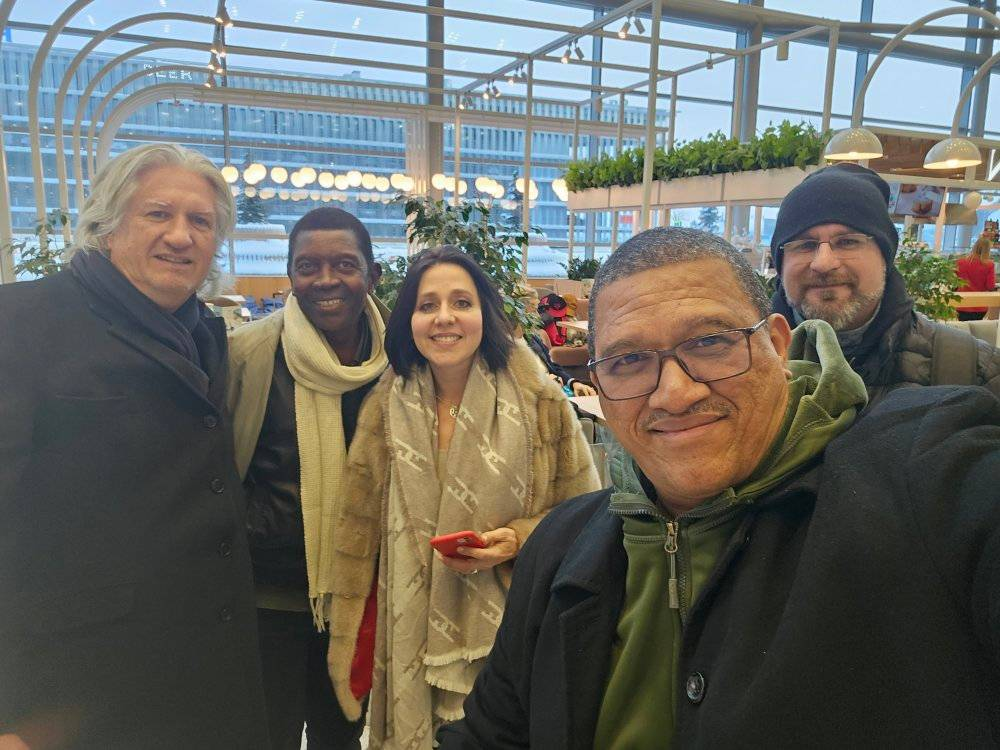
On the phone, Fransman appears as a very engaged and enthusiastic politician. He has a very defined vision of the world which he shares passionately. He is also a former ANC member of Parliament and former deputy minister of international relations under Jacob Zuma in the 2010s. In addition to his political engagement in his new party People’s Movement for Change, he runs several initiatives: a media and production company called Moja Multimedia and a channel dedicated to the BRICS. Fransman also travels extensively to Russia, several times per year to attend forums and conferences.
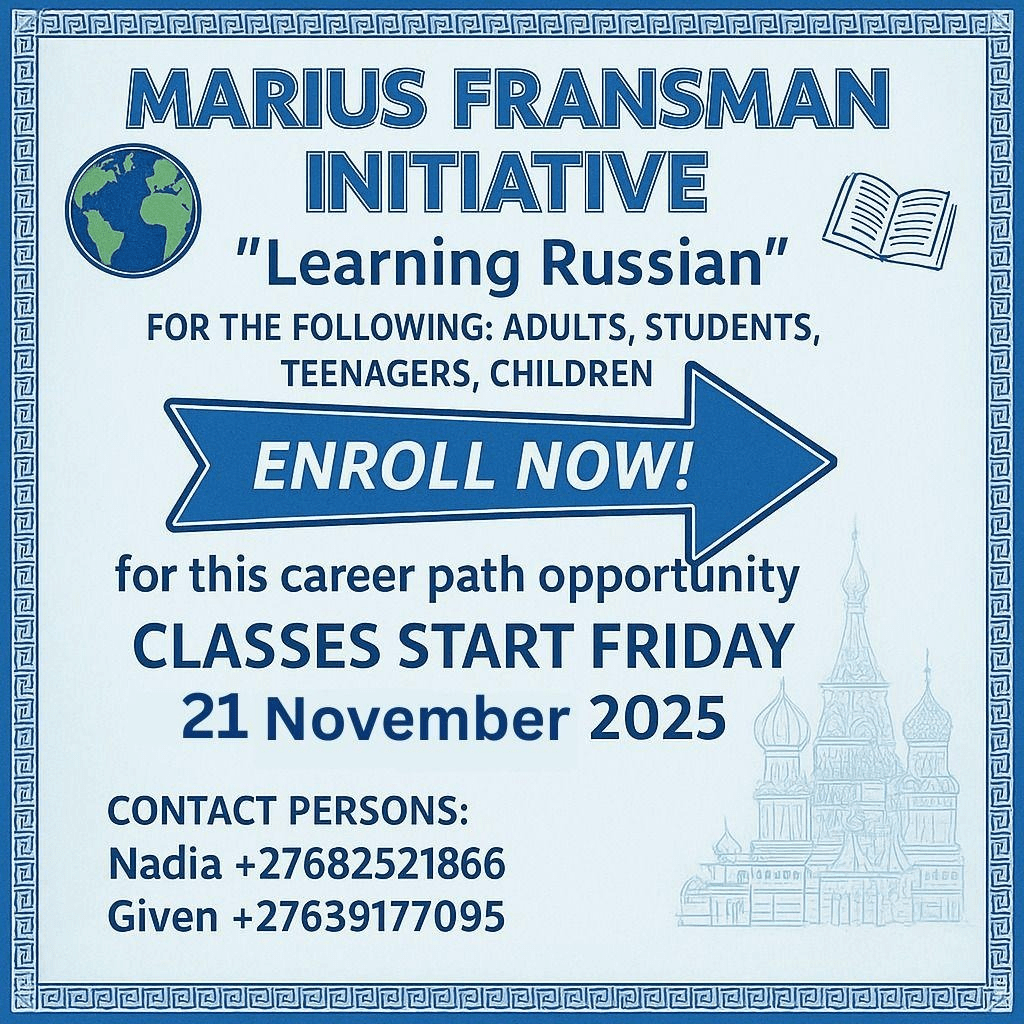
In November 2025, Fransman launched a course to learn Russian for his community arguing the need to reverse a trend based on South African elites preventing people and small business owners to work with the BRICs countries including Russia while making the biggest profits with them.
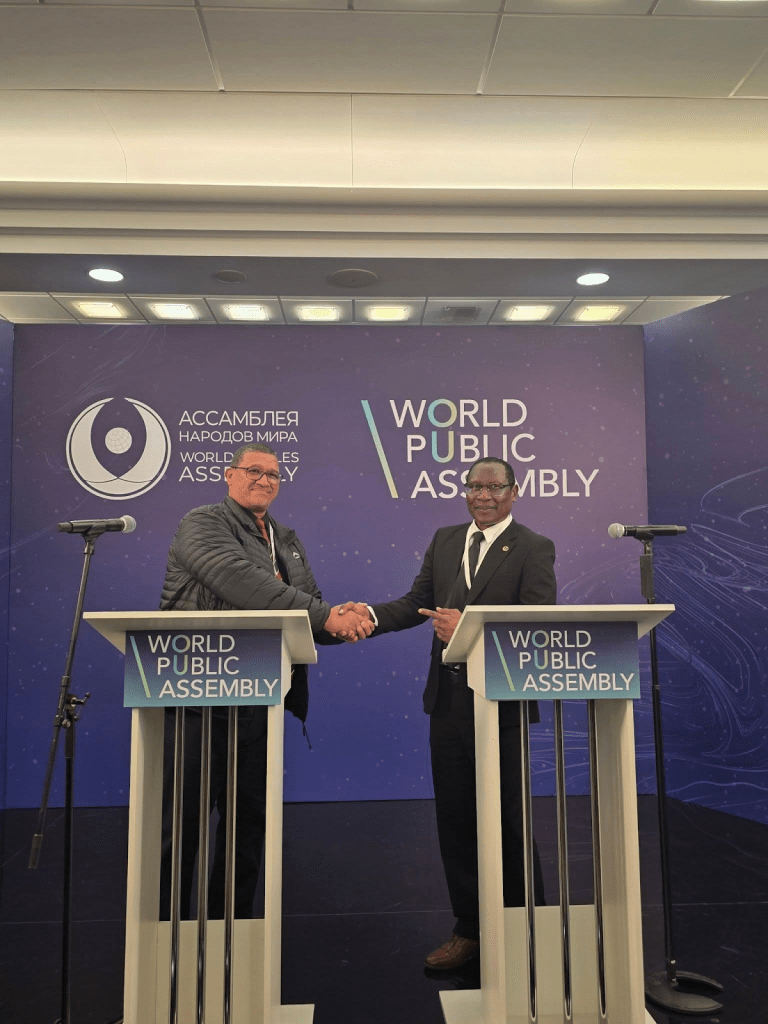
Through Moja Multimedia, he started co-producing the Legacy of Hope in February 2025.
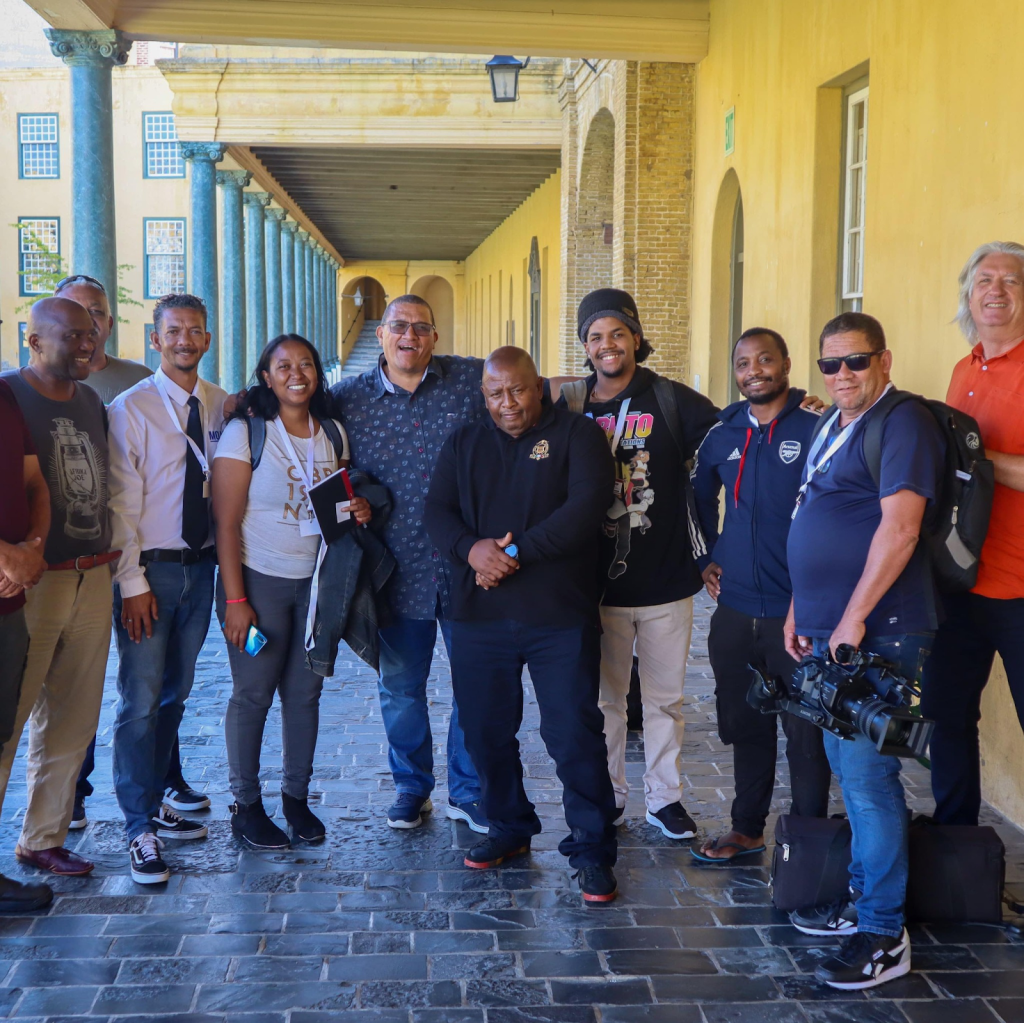
The themes about struggles against colonialism, the historical ties with the Soviet Union and history of South Africa’s path to democracy offer a great opportunity for Russia: aligned narratives with what has been propagated by Russia over the years and opportunities for Russian officials to attend launch events. Would all of that warrant monthly rewards for Fransman? According to additional documents written by Africa Politology and obtained by Forbidden Stories, Marius Fransman would have received a monthly payment of 900 USD from December 2024 to February 2025. Questioned about it, Fransman denies knowing Africa Politology and stated he did not receive any funding from the network for the film: “It was a project we financed ourselves.”. It is unclear to the investigative consortium how the funds have been distributed to him.
Shady Business Angel
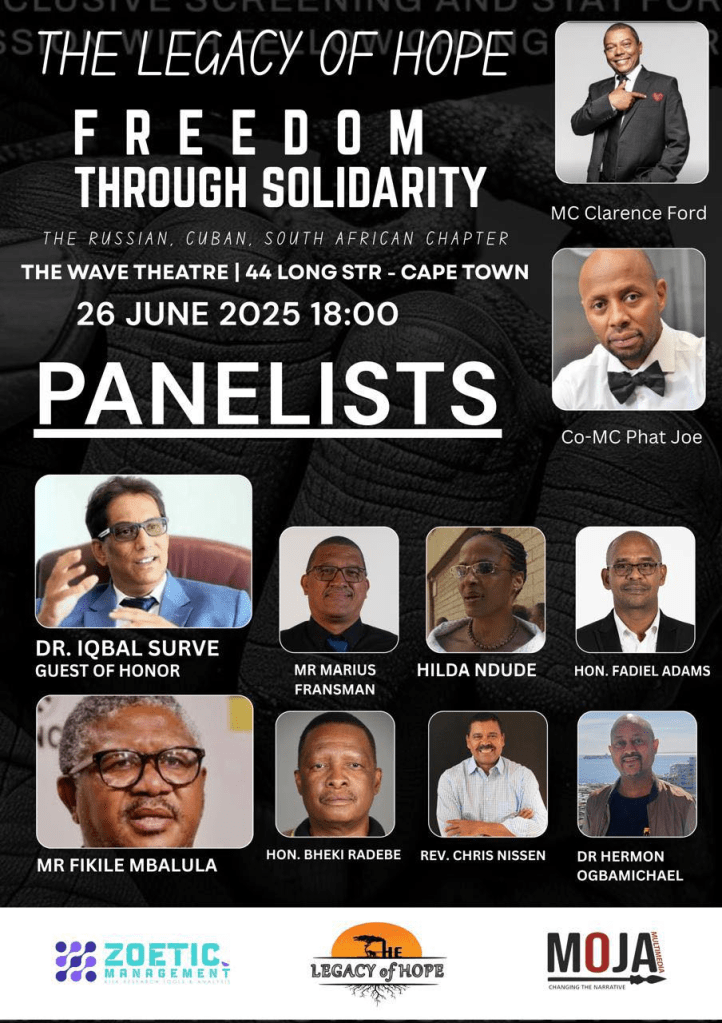
Legacy of Hope is also produced by another company, Zoetic Management. According to the South African corporate registry, Zoetic Management is directed by Bo Mbindwane. While the budget of the film remains a secret as none of the persons contacted gave any financial information, it seems Zoetic Management played a key role. According to director Harry Hofmeyer, Mbindwane was primarily responsible for financing.
Zoetic Management has not always been a documentary production company. In 2018, a R13‑million (about 800 000 USD) proposal was presented to the ANC’s election head, Fikile Mbalula. The project was to set up a virtual mobile network to disseminate ANC news and information, content-based voice, data and text mobile services. According to media, the deal stumbled because Mbalula’s advisor, Bo Mbindwane, became involved. Businessmen involved with the project described the situation as “Bo [Mbindwane] was introduced by Mbalula to us as the risk manager for the elections and then he was now bringing his own company, Zoetic, so that he can benefit from the deal. So he [Mbindwane] went to Cell C to negotiate on behalf of the ANC without Impepho, even though it was Impepho that brought it to the ANC”.
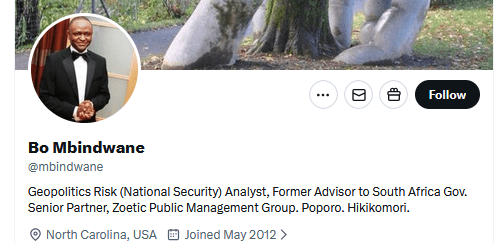
There is little information about Mbindwane online. A businessman involved in mining, he is living the high life and has a taste for models and actresses. According to acquaintances, Mbindwane is perceived as motivated by money. A sort of shadow advisor to Mbalula, he is currently prosecuted for the irregular procurement of eavesdropping signal grabbers. On the additional documents obtained by Forbidden Stories, payments of 3,000 USD per month in December 2024, January and February 2025 are listed for him for “communication with the ANC and analysis” services. Internal documents reveal he is actually the point of contact to the ANC for Russian operators. Notes show he has provided confidential party information during several meetings and has been giving his analysis of events to the new Russian SVR organisation. Mbindwane denies categorically having met with Russian nationals in December 2024 or at “any other time.” “I was not in South Africa in 2024,” Mbindwane states in a letter sent to Forbidden Stories, questioning the authenticity of the documents from the data leak. “The ANC maintains its relations with Russia directly and through established inter-party channels, without intermediaries or unidentified third parties,” he writes. Mbindwane adds that during his trips to Russia, his engagements “took place exclusively with representatives of the Russian government, through official diplomatic channels.”
Fikele Mbalula also denied to the consortium any Russian support. “We have never asked for Moscow’s support, and we have never received any support whatsoever. That has never happened,” Mbalula said when reached by telephone. He acknowledged having met with “groups of researchers,” but “from all over the world … even Scandinavians.” When asked about Sokolov and other former employees of Prigozhin, he said, “It’s possible that we met them, but I don’t remember the names of all the people we see.” Funding, polls, recommendations: “It’s all nonsense,” Mbalula said.
Is it worth it?
The long-term relationship between Africa Politology, Fikile Mbalula, and Bo Mbindwane raises a critical question. With personal ambition and a thirst for power seemingly intertwined with ideological motives, one must ask: is the price of an alliance with Africa Politology – now SVR – justified? Russia enjoys natural allies in South Africa, such as Marius Fransman, whose political views often mirror those of BRICS and Russia. Given this, one must consider the potential negative impact of clandestine SVR actions on Russia’s partners: specifically, the risk of weakening, involving them into unnecessary scandals or discrediting them. When questioned about a meeting between Mbalula, Mbindwane and Russian operators, Fransman said, “I know nothing about Mbalula’s activities.” It is also unclear whether the ANC leadership was aware of the secret meetings and arrangements between Mbindwane and Mbalula with Russian agents of influence.
Africa Politology has benefited from very high budgets to help win the elections. But the results are difficult to show. Murmur Intelligence, a social-listening data lab collaborating with The Continent, analysed several of the campaigns retrospectively. Its findings suggest the impact was far smaller than the internal reports claimed.
One example was the so-called “DA racists mug” campaign. It alleged that mugs bearing racist slogans had been ordered for a birthday party for DA leader John Steenhuisen. But the data tells a different story. According to Murmur Intelligence, the campaign was activated by one of South Africa’s biggest paid influencers but ultimately “had little impact” and “was poorly spread”. In total, analysts identified only 214 posts linked to the effort, and “network analysis shows that it did not tap into any larger conversations.”
The other campaigns performed similarly. “The only notable expansion beyond the original influencer networks occurred during the #DAMustFall campaign when DA supporters engaged directly to dispute or counter the claims,” Murmur Intelligence said in a report prepared for The Continent.
In the June 2024 election, the ANC’s share of parliament seats fell below 50% for the first time since the end of apartheid and it was forced to enter a governing coalition with the DA and other parties.
 Investigations with Impact
Leave a comment