
The continent received 1,431 pages of internal documents from “The Company”. Our investigative consortium comprised of Forbidden Stories, Dossier Center, iStories and openDemocracy and a network of Russian-speaking independent journalists identified Africa Politology, the Wagner Group’s influence arm. Following the death of Evgeny Prigozhin, Africa Politology started to work in concert with the SVR, Russia’s Foreign Intelligence Service, transforming its activities into what appears to be the most extensive covert campaign in the Global South aimed at advancing Moscow’s interests.
Drawing on strategic blueprints, detailed budgets, staff biographies, media inventories, consultancy reports, operational briefings and presentations outlining disinformation campaigns, INPACT/AEOW is now peeling back the layers of obfuscation to examine the mechanisms devised by the SVR to mask its footprint. What emerges is an anatomy of deception.
Check episode 1 here.
SVR, master of disguise
Dmitry Faddeev can often be found playing on a tennis court. He was indeed the ex-president of quite an exclusive sports club for many years. Located on the premises of the military unit 33947, Dynamo-21 gathers sportspeople serving at the SVR. His flat is located at 6/5 Akademika Anokhina street in Moscow, a known SVR residents address. This is no surprise, Faddeev is a high level SVR officer.
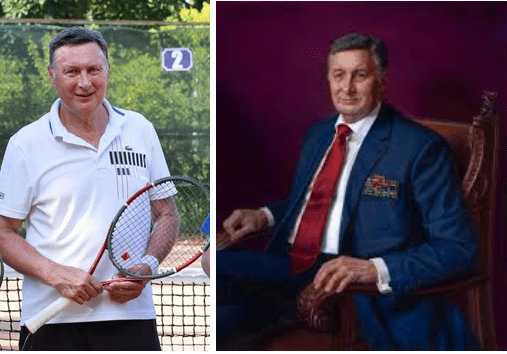
Aged 74, General Faddeev had officially the position of SVR Deputy Director as early as 2011 and has had an extensive espionage career. From 1997 to 1999, Faddeev worked at the Currency And Financial Department of the Russian Ministry of Foreign Affairs. A legacy structure from the Soviet Union, this department was designed to host SVR and GRU officers conducting undercover operations abroad. He was previously posted in Vienna and worked under the cover of political advisor in Berlin from 2006 to 2008.
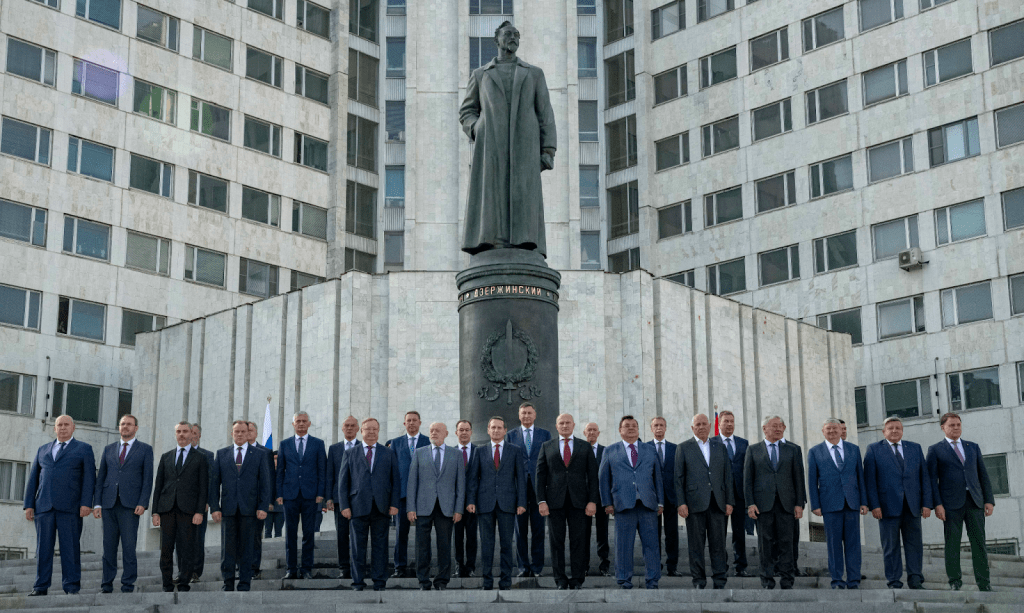
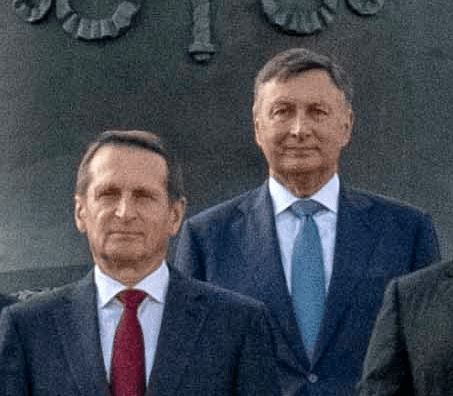
But today Faddeev is leading the group of advisors to the SVR Director, Sergey Naryshkin, on African affairs. He knows well the Wagner group and has been the reference authority for the Prigozhin sphere within the SVR. According to a reliable source consulted by Forbidden Stories, Dmitry Faddeev has been directly involved in the takeover of the Africa Politology network. He is now overviewing and setting the main strategic priorities of the network for the African continent.
Closer to the operations, another SVR officer – based on information obtained by Forbidden Stories – has played an important role linking Africa Politology with the service and maintaining regular contact with Africa Politology management. Ilya Savelyev has also worked at the Currency And Financial Department of the Russian Ministry of Foreign Affairs from 2003 to 2007. During that time he was posted as First Secretary to the Russian representation to NATO. He later worked as counsellor to the Russian Embassy in Madrid and Consul in Mumbai. Since 2023, he has been posted by the SVR as the Executive Director for the Centre for the Study of Socio-political Problems of African and BRICS countries and assistant to the Rector of St Petersburg State University. Until 2021, he also occupied a SVR residents home address.
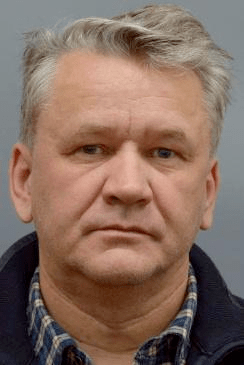
The death of Evgeny Prigozhin in August 2023 gave the SVR the perfect opportunity to seize Africa Politology network by designing a mirror of illusions to conceal their control over the “Company”. But Russia’s Foreign intelligence service could not do it alone. According to a reliable source of the consortium, contact was made with Sergey Mashkevich, the head of Africa Politology and veteran of the Prigozhin’s galaxy. For a meeting scheduled mid-December, a preparatory questionnaire, obtained by Forbidden Stories, was shared by the SVR with Africa Politology.
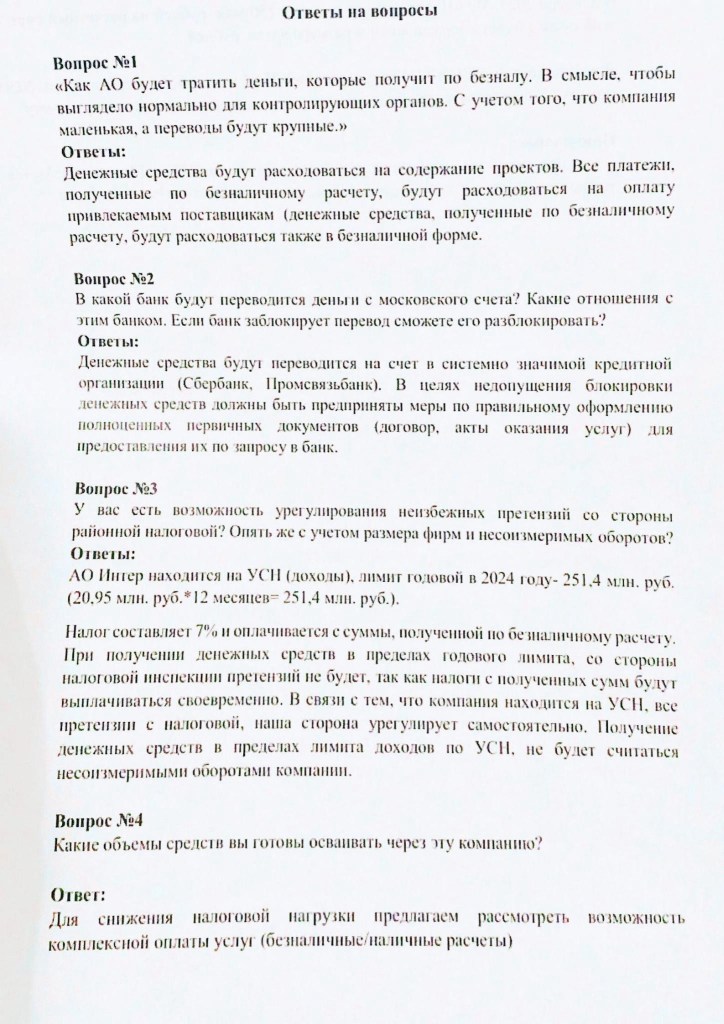
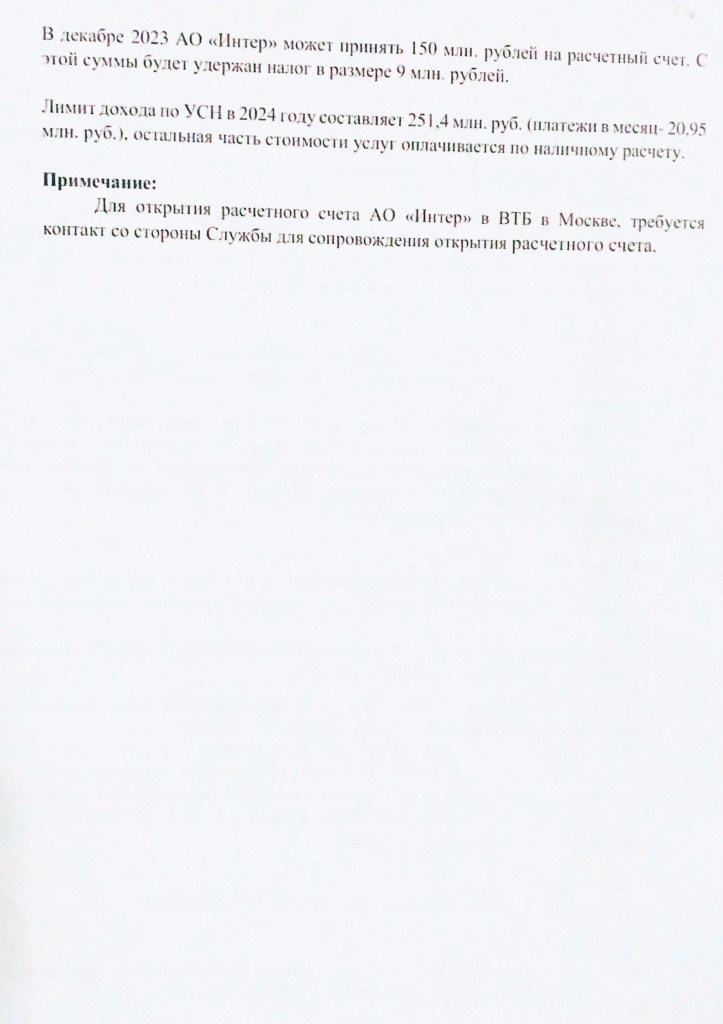
The questions mention JSC Inter, a company used by Africa Politology to receive money transferred by the SVR. The objective of the preparatory questionnaire is to ensure that the company will behave according to Russian regulations and within the limits of the fiscal regime it is registered under. It cannot receive more than 251 million rubles per year (3,268,800 USD) or 20.9 million rubles monthly (0.27 million USD). The money received will be used solely to pay suppliers or get cash. Africa Politology suggests also payments for service in cash to avoid scrutiny. On paper, JSC Inter is a small company benefiting from a simplified tax regime for its low reported turn-over. The SVR just has to facilitate the opening of a bank account.
The answers provided seem to be satisfactory as the meeting takes place on December 15th 2023 between Africa Politology’s head, Sergey Mashkevich and SVR agents. According to reliable sources consulted by Forbidden Stories, a contract was signed a couple of days later on December 20th between two companies: JSC Inter and Intertechtrade LLC.
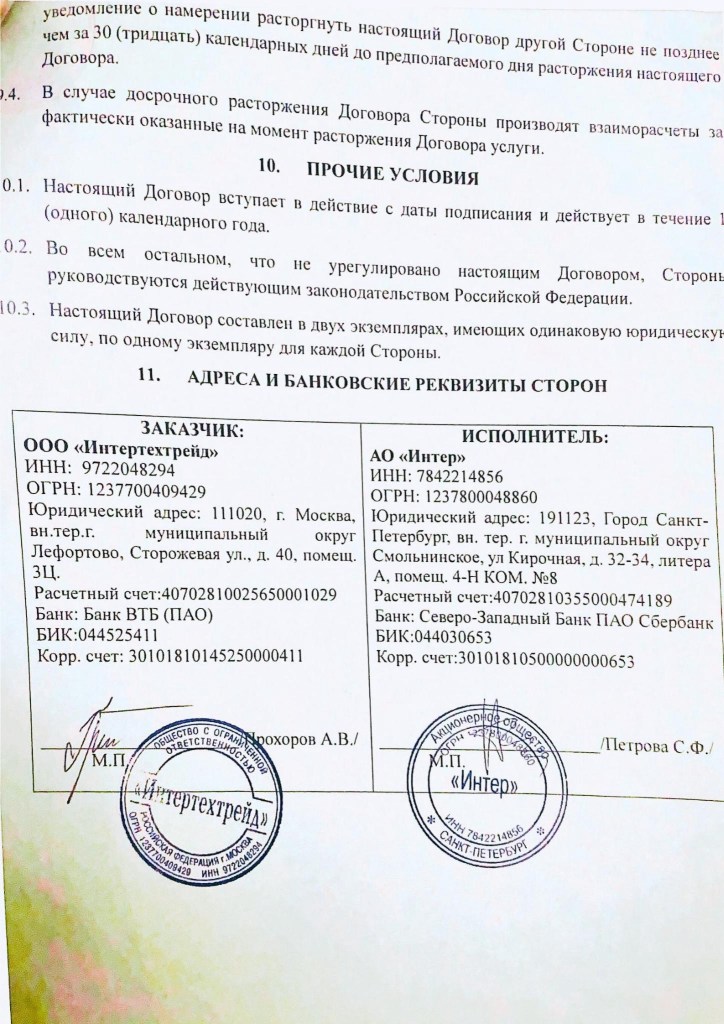
JSC Inter (TIN Number 7842214856) was created on 24th April 2023 and registered at building 32-34,Kurochnaya street, in Saint Petersburg. Its activities are financial advisory, consulting, head office and “international activities”. The company is managed by Svetlana Petrova, who used to work in the past for an e-commerce platform for children called Votonya according to data retrieved from Russian databases.
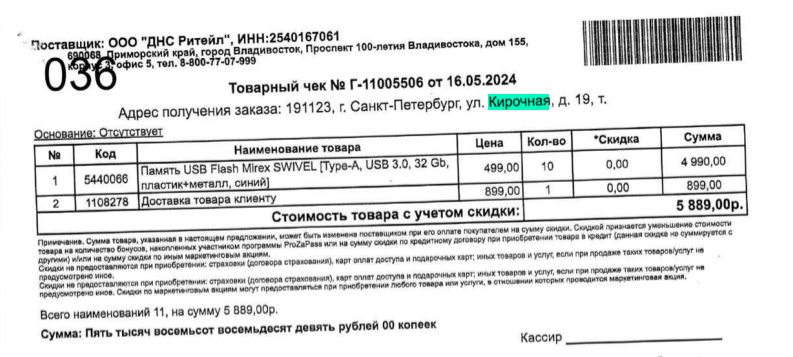
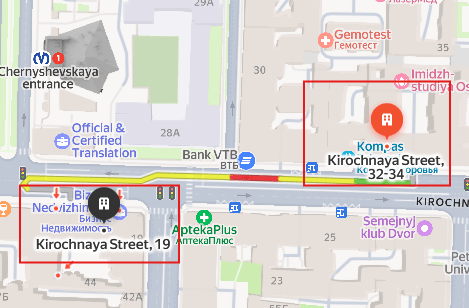
In 2024, the company registered good financial performance with a profit margin of 32%, a turnover of 6.7 million rubles (87,663 USD) and a net profit of 2.12 million Rubles (27,596 USD). All these numbers are below the yearly 251 million rubles threshold. In the leaked documents, an invoice for a USB key mentions a delivery address a couple of buildings away on the same street as JSC Inter.
The other party, Intertechtrade LLC (TIN number 9722048294), was created on 15 June 2023 in Moscow where 438 other companies are also registered. The company specialises in the wholesale trade of computing and telecommunications equipment as well as consulting activities in computer technology, data processing activities, consulting and market research.The director of Intertechtrade, Alexander Prokhorov, has no history in the Russian administration databases. His passport was registered in 2020 but was never used to travel within Russia by train or plane. His phone number was registered on 28th February 2023 and the man aged 64 years got a TIN number in June 2023. A total ghost who may be a fictitious identity. On paper, Intertechtrade recorded a heavy loss of 6.7 million rubles (87,663 USD) in 2024. This amount is also recorded as loans in the long-term liability section of its balance sheet. The company is clearly being used as a vehicle by the SVR to infuse money and cash to Africa Politology.
The use of two companies is to obfuscate the ultimate beneficiary, the SVR. It creates layers of companies with no links with each other. Money can be moved from vehicle to vehicle through cash deposits and carefully selected amounts of money to avoid detectionI. This complex structure would enable plausible deniability. If the network is busted, it is easy to dismantle Intertechtrade LLC as it has no real director, no solvability and can be easily liquidated. Nobody could find out the SVR is behind it. On the ground, consultants hand over and pay in cash. The system is untraceable.
Inside Africa Politology where the engineers of chaos operate
Two months after the signature of the contract, Africa Politology moved out of their old office located on Bolshoy Prospekt VO. In February 2024, a key member of the organization, Artem Vitalievich Gorny, ordered a moving truck to unload furniture at 8A Pirogova Lane. This address, in a charming stone building a few hundred meters from Saint Isaac’s Cathedral, is now believed to be the central office of the “Russian back office.” This is evidenced by dozens of Yandex taxi trips found in internal documents mentioning this destination. A new office, start of a new story.
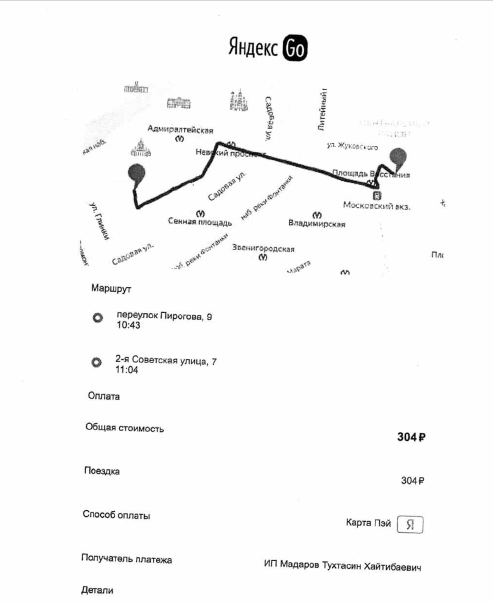
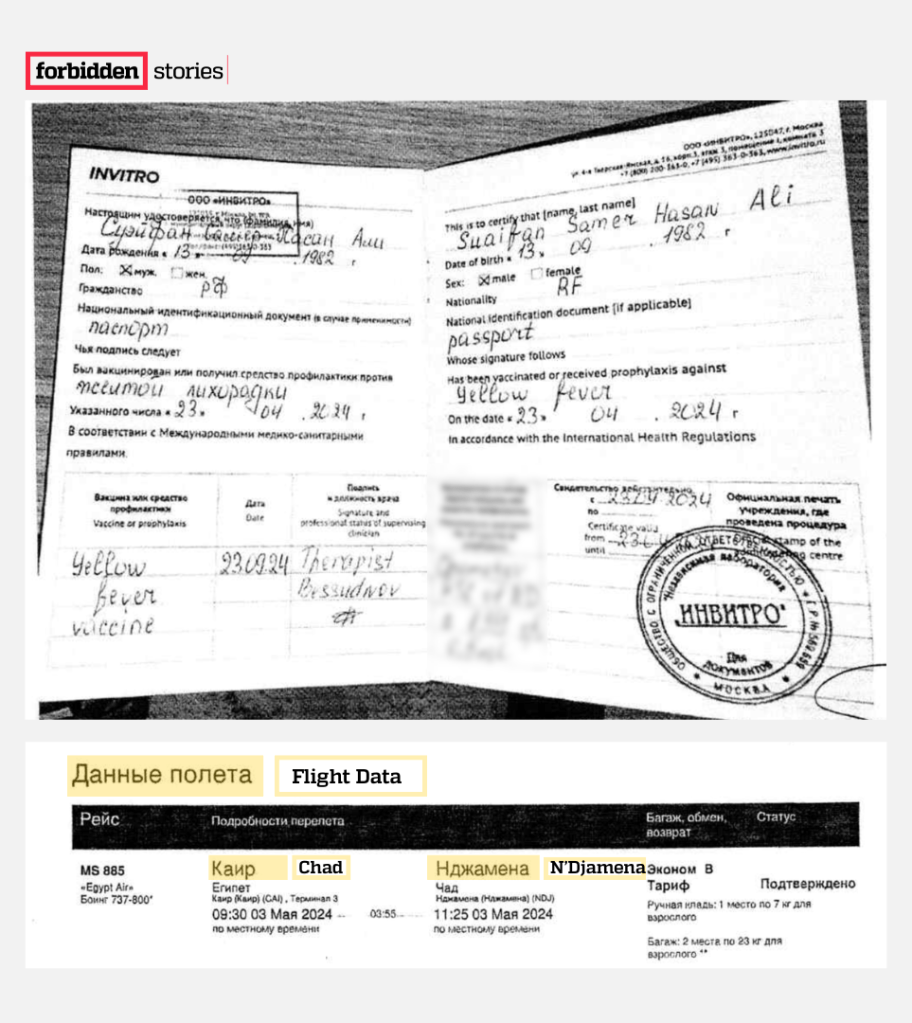
Among the documents are airline tickets to Bamako or N’Djamena, vaccination certificates and meticulous planning and budget spreadsheets. They offer a rare glimpse into the people behind the machinery: the architects of disruption and the managers of a sprawling influence apparatus operating across two continents.
Africa Politology presents itself as a loose constellation of analysts and consultants. None appears formally employed by JSC Inter. Some are linked to StratConsult LLC, as INPACT reported in its first instalment. Most, however, seem to operate as independent contractors. There is little evidence of standard employment contracts — a structure that enhances opacity and allows the organisation to scale teams up or down depending on the mission at hand. Compensation appears to rely largely on cash and modest bank transfers, a financial footprint designed to remain faint. Just in July 2024, more than 90 million roubles were received in cash for an equivalent projected budget.
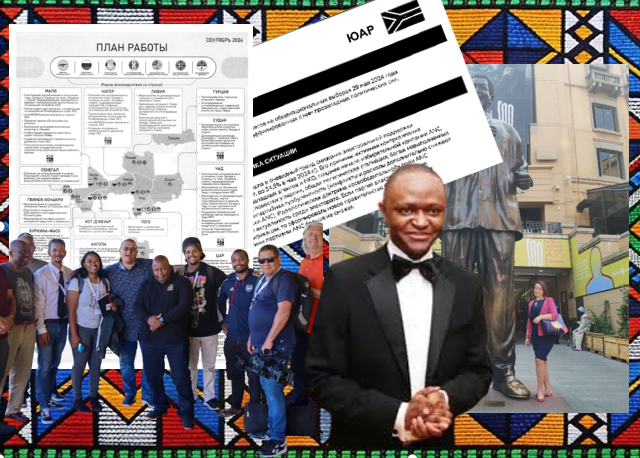
The leaked documents mention 39 consultants working for Africa Politology, based on additional investigations, but our media consortium has been able to track and identify 60 consultants working for Africa Politology throughout the years. 17 of them are former operatives of the Prigozhin’s era like Maxim Shugaley or Yulia Afanasyeva Berg. Shugaley used to be behind political campaigns in Libya but also Sudan and Mali. He got arrested for espionage in Libya and remained in jail for months. Afanasyeva ran AFRIC, a fake thinktank building the profile of Panafrican figures like Nathalie Yamb or Kemi Seba in Russia and abroad but also running political campaigns and fake elections observation missions in Africa. Both of them worked together on Afghanistan after the return in power of the Taliban, laying the ground for renewed cooperation with Russia. Shugaley focused for a while on the Russian army engaged in Ukraine and reappeared in Chad. Afanasyeva kept working on Africa through GlobUS, a new platform recycling the old AFRIC team, missions in South Africa. She later led African influencers delegations to observe the manufactured referendum in Ukraine’s occupied territories. Recently she was seen engaged in the promotion of Russian renewable energies through business delegations in several African countries with IBAC, the International Business Acceleration Centre.
Our investigation suggests a hierarchal organization led by Sergey Mashkevich, supported by an assistant. Gornyi serves as a deputy director, with Nefedov overseeing international missions. Mashkevich coordinates seven distinct operational desks: political sciences and public affairs, media and digital, analysis, sociology, legal, translation, and a separate entity hosting the Foundation for the Protection of National Values, which is directed by Maxim Shugaley.
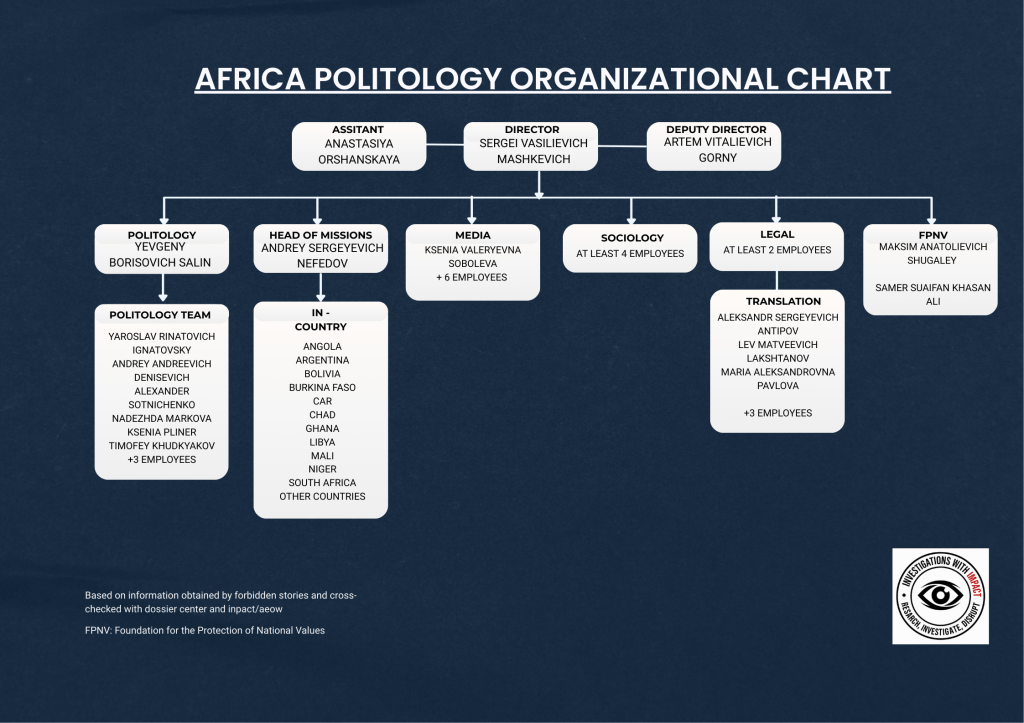
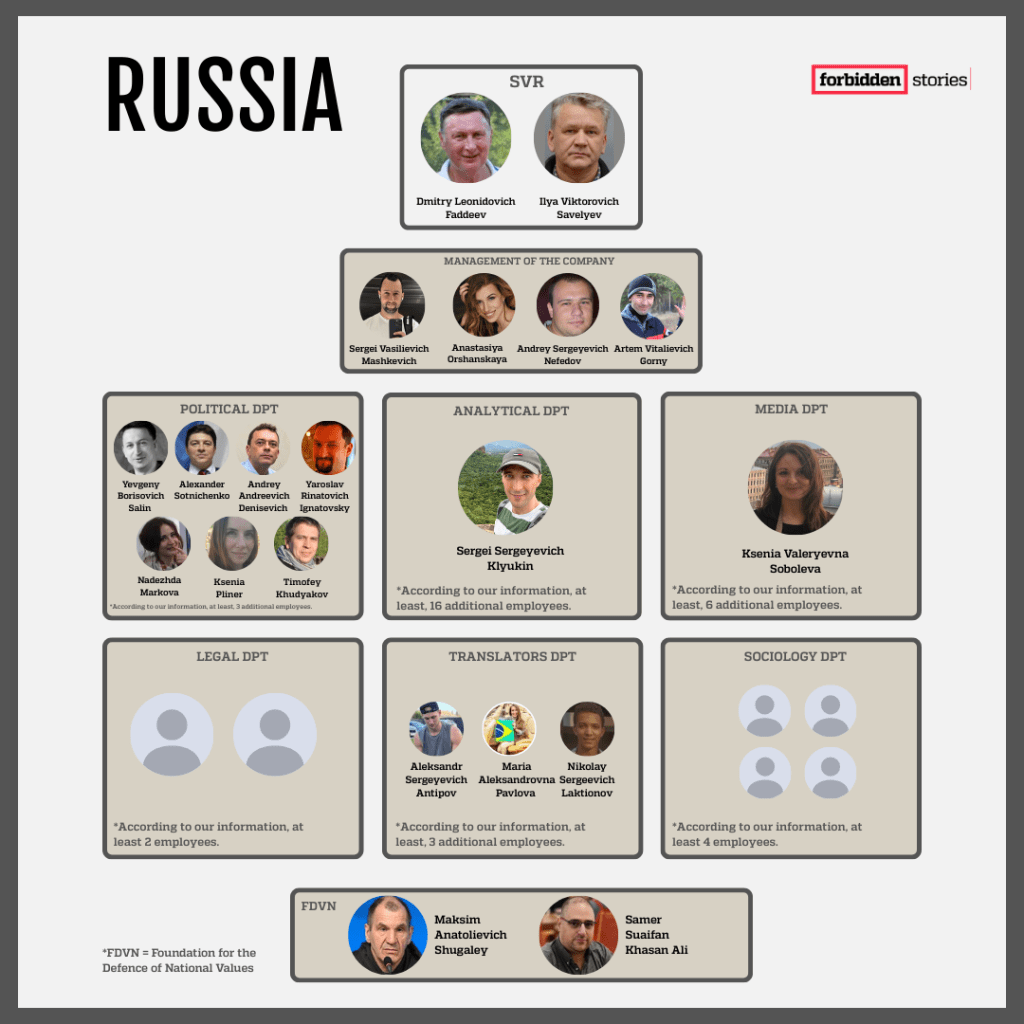
Africa Politology deploys teams across numerous countries. Reliable sources indicate that between 2024 and 2025, their operations included Angola, Argentina, Bolivia, Burkina Faso, CAR, Chad, Ghana, Libya, Mali, Niger, Sudan, South Africa, and DRC. Furthermore, Africa Politology has been active in Madagascar, Zimbabwe, Egypt, Cameroon, Benin, Namibia, and other nations, highlighting the substantial scope of their geographic reach.
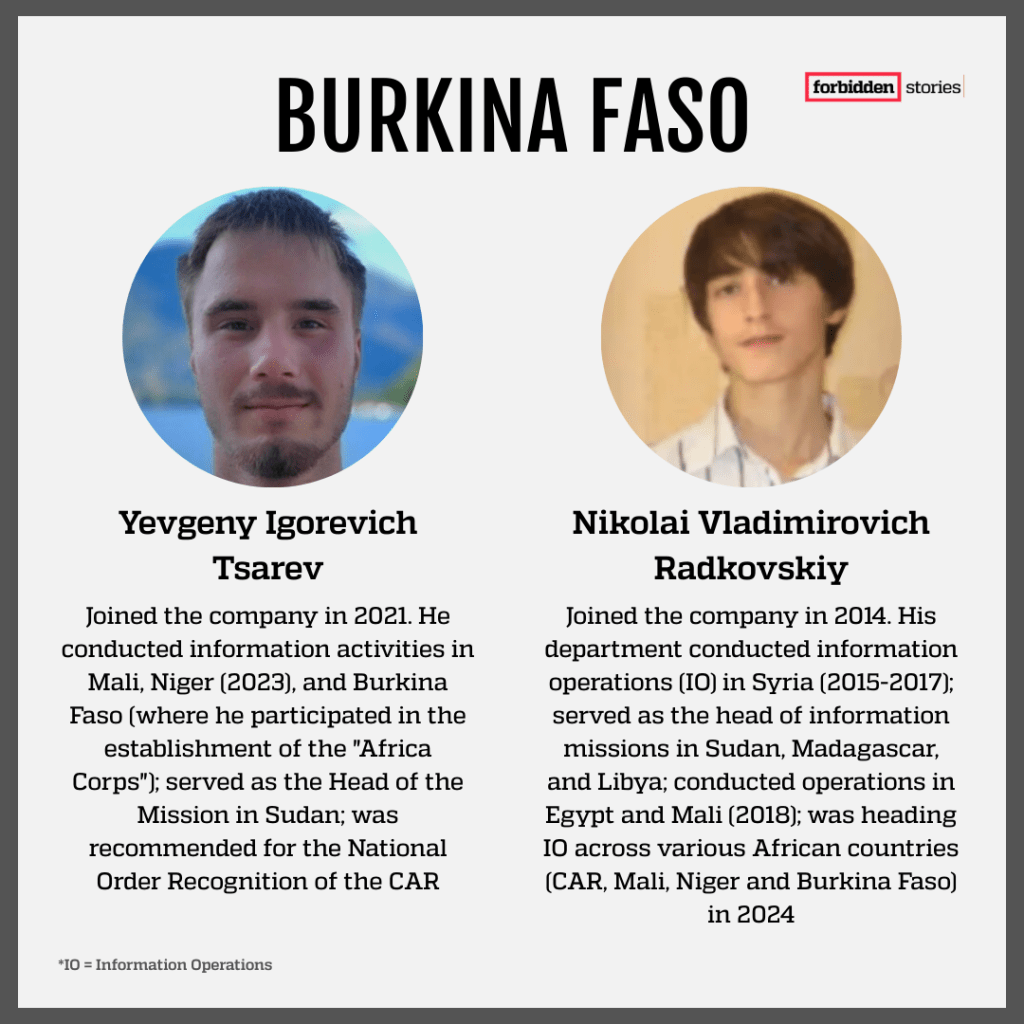
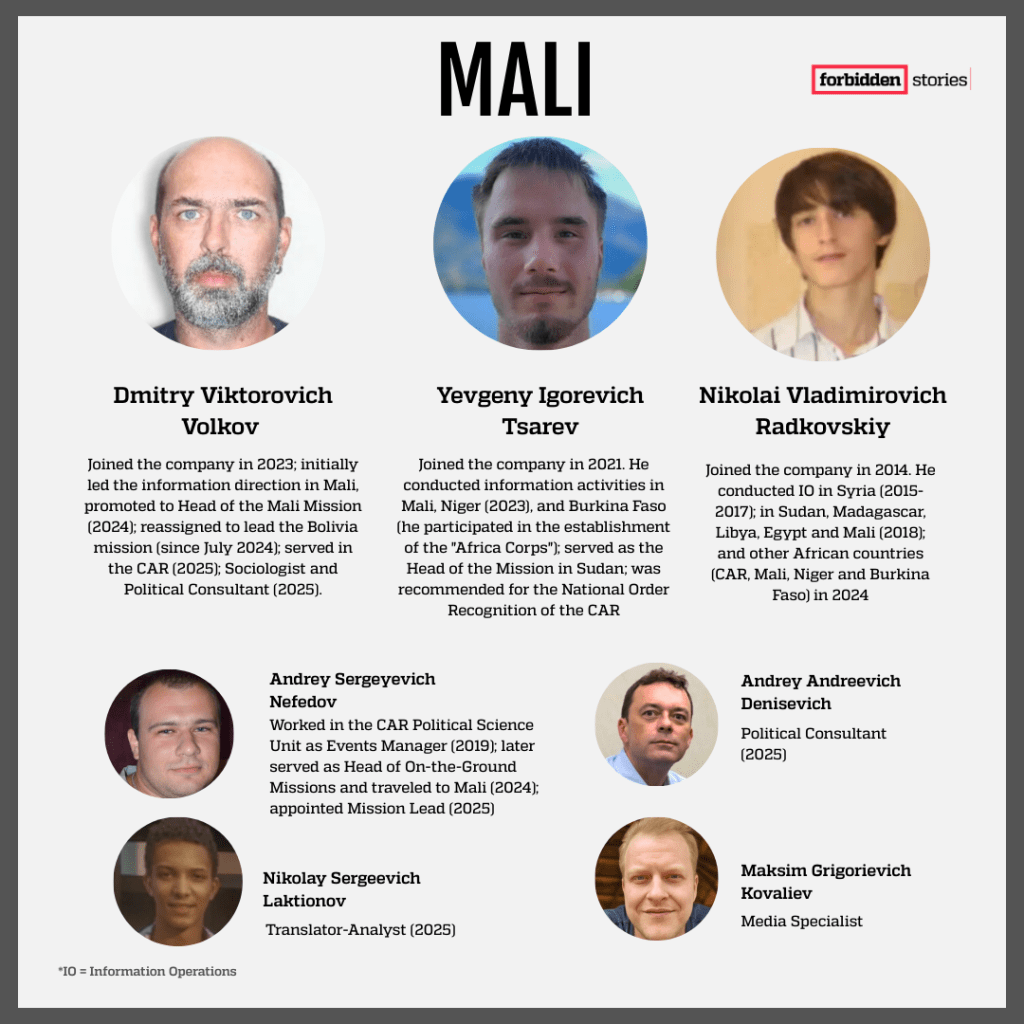
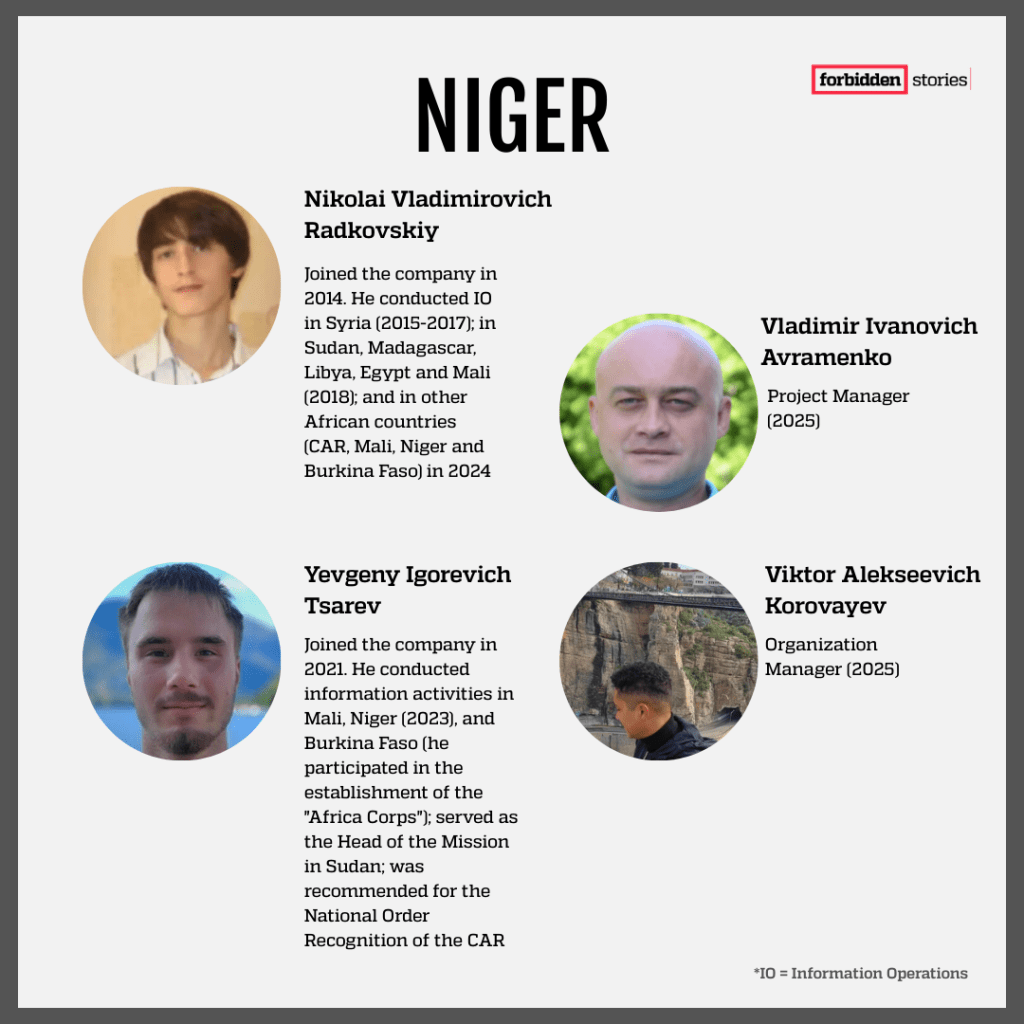
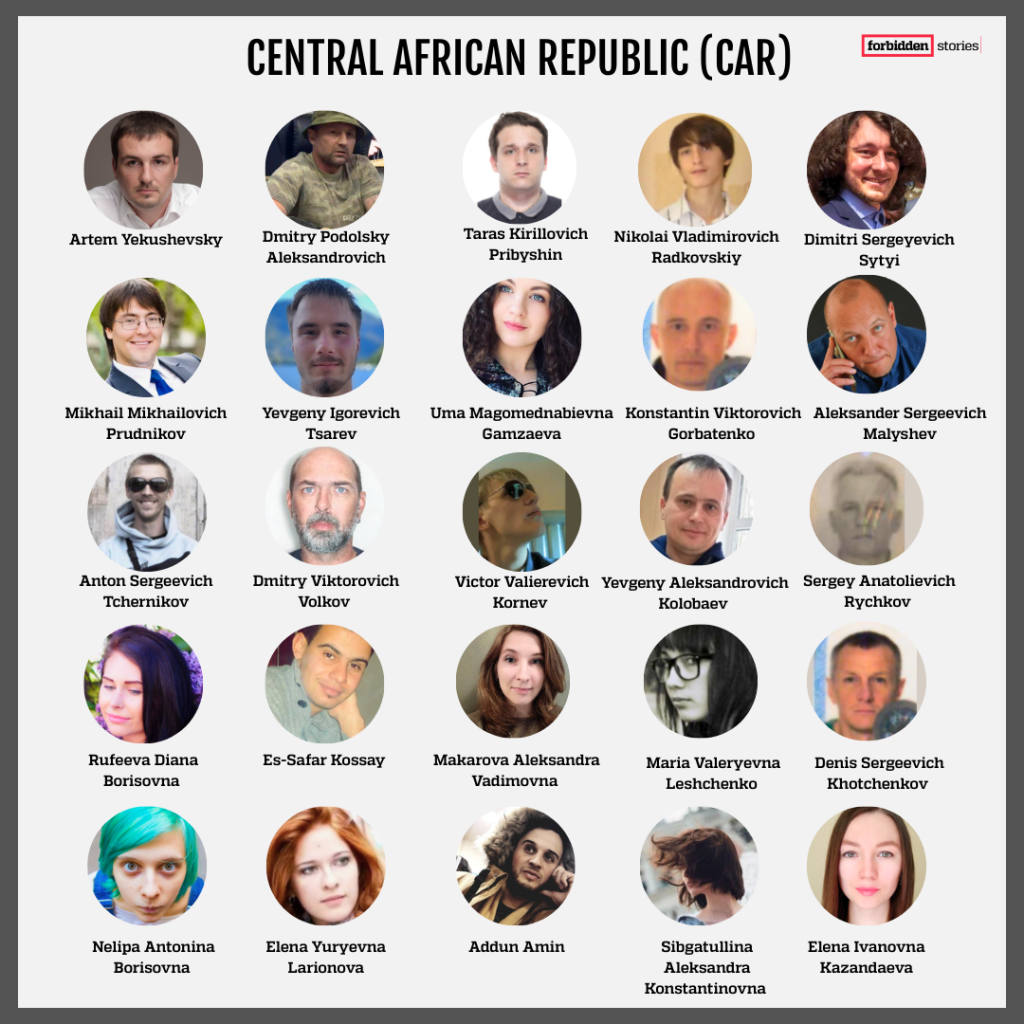
The Company does not face any crisis. According to our information, 98 consultants were working for the network. In December 2025, there were at least 52 project managers, political consultants, analysts and media managers working from the Russian office according to new internal documents we were able to consult.
The toolbox to shape illusions
The secretive network is tasked to support Russian interests by reshaping perceptions in favour of Russia’s positions, pushing economic interests and eliminating competitions. To achieve these objectives, Africa Politology operators use a very complete toolbox to shape perceptions on the ground. The team combines analysis and audience segmentation research with lobbying, policy shaping and covert information, online and offline campaigns. The SVR provides a layer of intelligence with information on specific topics, recruits sources, opens access and places key agents of influence in strategic roles.
The Company conducts a lot of research on various political and economic topics as well as on the impact of events on local public opinions. In October 2024, Africa Politology prepared a memo on the head of the Central Bank of Libya, Mohamed Abdulsalam ash-Shukri and another one on the political position of the Senegalese Pan-Africanist Guy Marius Sagna. Part of this research is done through the interviews of key experts or “counter-parts” who are going to share their viewpoint and local knowledge. The operatives also conduct polls and opinion surveys in-country or by telephone (1,133 respondents in the DRC in June 2024, 1,024 in Mali in August, etc.).
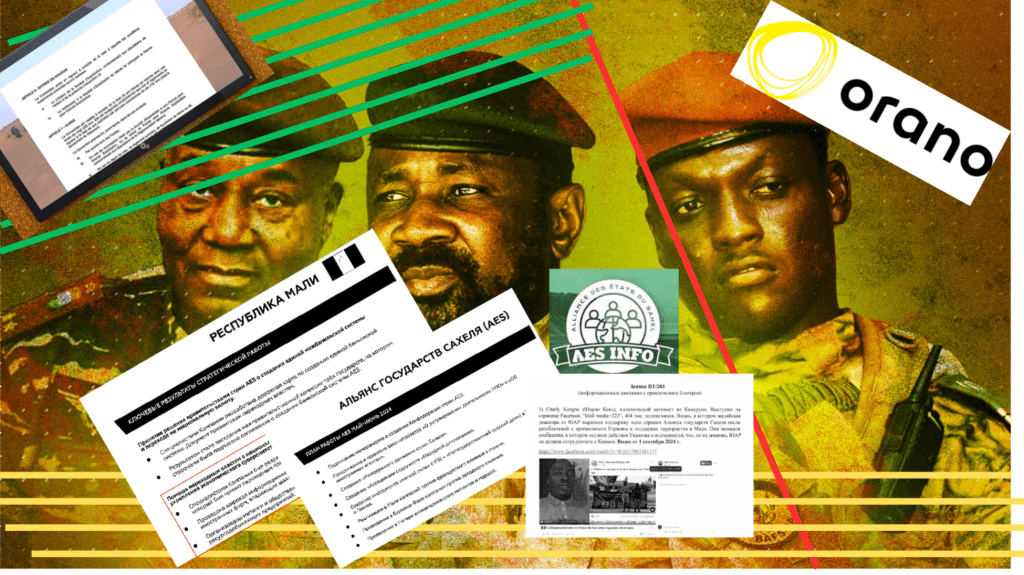
The politology team lobbies and drafts legal documents. Throughout 2024, Africa Politology is lobbying for a law on foreign agents in Mali, Niger, CAR and Burkina Faso. They also prepare the draft lease agreement for the Russian Houses. They also drafted a treaty on joint defense and security between CAR, Chad and Cameroon.
According to a document seen by INPACT/AEOW, Africa Politology manages a network of sources and agents which are used to gain influence or access. Some of them are in low positions in strategic Ministry’s offices while others occupy high level positions in the security apparatus or political parties of target countries.
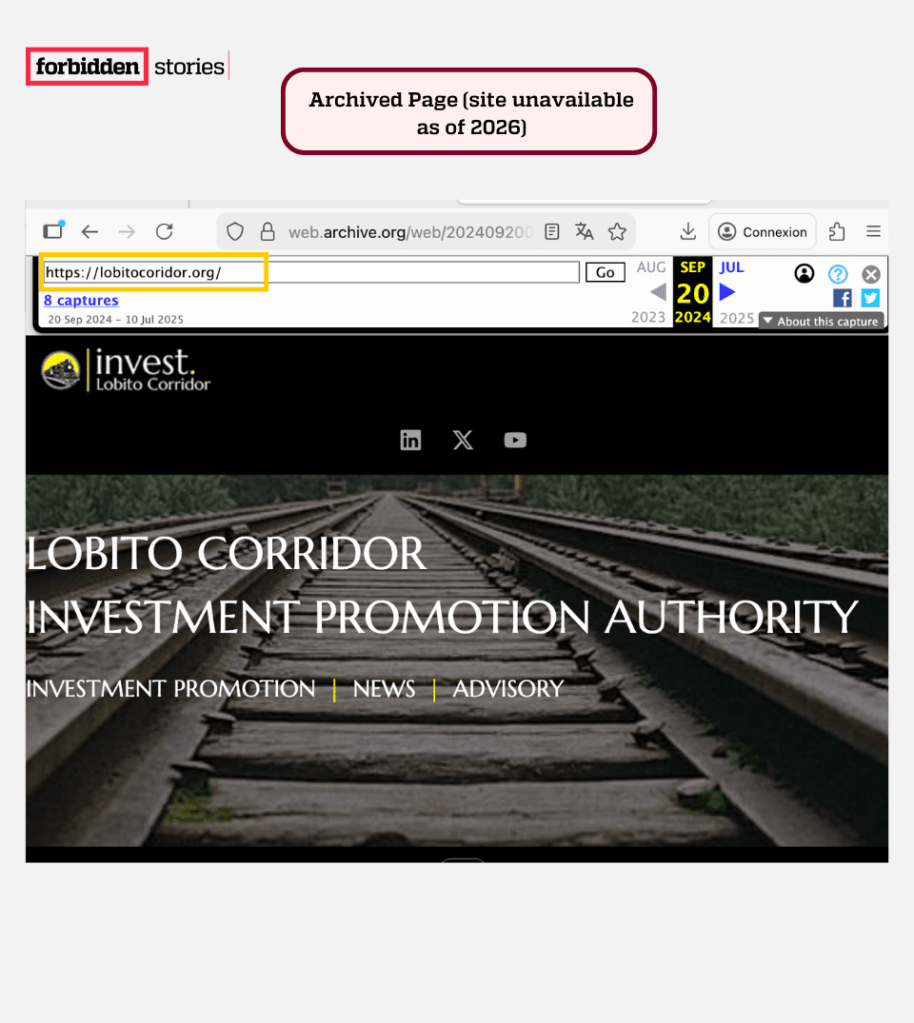
Africa Politology creates and operates information campaigns. They operate media like Lengo Songo but also place articles in key media and media platforms in Africa and Latin America. In August 2024, for example, 516 articles were placed in various outlets for a total of 340,000 USD according to an internal statement. In addition they build an online ecosystem ready to be activated or to fool their local audience. To do so the Company created a fake website. With one less “R”, the link to the website https://www.lobitocoridor%5B.%5Dorg/ is identical in appearance to the official address (https://www.lobitocorridor.org/) of the Lobito Corridor website, a strategic railway line linking the port of Lobito in Angola to the Democratic Republic of Congo, which is crucial for the transport of minerals and European and American investment.
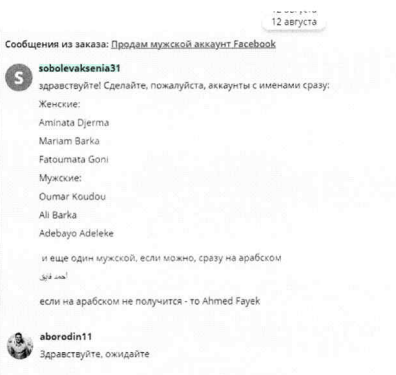
The operatives create an echo chamber of fake accounts online to amplify their narratives or mobilise sentiment. In August 2024, Ksenia Valeryevna Soboleva, working for Africa Politology as head of Media Department, placed an order on Telegram to buy Facebook accounts. She wrote to the service provider of “The Company”: “Please create accounts with these names right away. Profiles of women: Aminata Djerma, Mariam Barka […] and men: Oumar Koudou, Ali Barka“, “Oh, and for another man, if possible, [write the [name] directly in Arabic“. Soboleva, like a woman named Dina Trumm, also makes payments to pro-Russian Telegram accounts, including Russian journalist Abbas Djuma, who had 61,175 followers in August 2024 and was sanctioned by the United States.
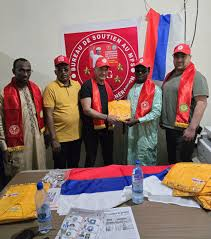
But Africa Politology conducts offline campaigns as well. Many cultural events are organised through the franchised Russian Houses and also events gathering political youth organisations or activists. On 29 June 2024, the Company organised a rally in support of the transition authorities of Mali and for Mali’s accession to the BRICS. The Company reports that more than 1,000 people took part in the event. On the budget sheets, a line is reserved for “picket events”, in other words, organising paid demonstrations. The company also pays for graffiti artists and for merchandising to be distributed locally.

Struggling to Spin
The SVR has now taken over the most effective tool of the Wagner Group. A full network of skilled operators deployed in countries to create and conduct influence operations. Budgets are high and yet some questions remain on the efficiency of their campaigns.
Russia is playing the long game but the results are not always quick to materialise. On the African continent, Russia is signing a lot of Memorandums of Understanding but fails to convert these non-binding agreements into money-making businesses. Long-term battles for Russia like the CFA franc keep creating debates but never come to fruition. In Bolivia, the campaign failed and President Luis Arce, charged with corruption, has been in prison since December 2025. The team was demobilised with 7 team members redispatched in other countries. Many examples of these failures and exaggerated operational reports can be used to illustrate how the Russian propaganda machine struggles to spin from time to time.
Finally there is a high price to pay in this profession. Africa Politology’s operatives are now more than ever working without any safety net. Sometimes they get caught by local authorities or their activities annoy the wrong person. This is the case of two famous operators. In September 2024, Maxim Shugaley and Samer Sueifan got arrested in Chad after spending months officially supporting Mahamat Deby’s campaign. According to the leaked document, they were even working “at the electoral headquarters of Chad’s transitional president” and even published a photoshoot at the time. In reality they were trying to bring Chad into Russia’s sphere of influence by “ exacerbating the political rivalry between the two candidates and pit the outgoing president Déby against his ‘co-pilot‘ [Masra],” aiming to “destroy the Deby-Masra tandem and cause the loss of control of the political situation in the country”.
According to court documents seen by INPACT, Shugaley and Sueifan were accused of running a network of paid journalists and influencers to destabilise the political situation. They were released in late November 2024. In August 2025, another team is facing issues in Angola. Lev Lakshtanov and Igor Ratchin were arrested for “financing terrorism and organizing influence operations aimed at destabilizing the country” according to official communications. Electronic equipment, SIM cards, and cash were seized from their apartment. The government officially labelled them members of Africa Politology.
At the time of Evgeny Prigozhin, Wagner operators were expandable assets. That was the purpose of a deniable arm length operation. But despite being closer to the state than ever, its operatives remain subject to the same mercenary calculus: when circumstances shift, they still are disowned.
Neither the individuals in this network nor the Russian Foreign Intelligence Service provided a response to the consortium’s questions when they were contacted.


 Investigations with Impact
Leave a comment