
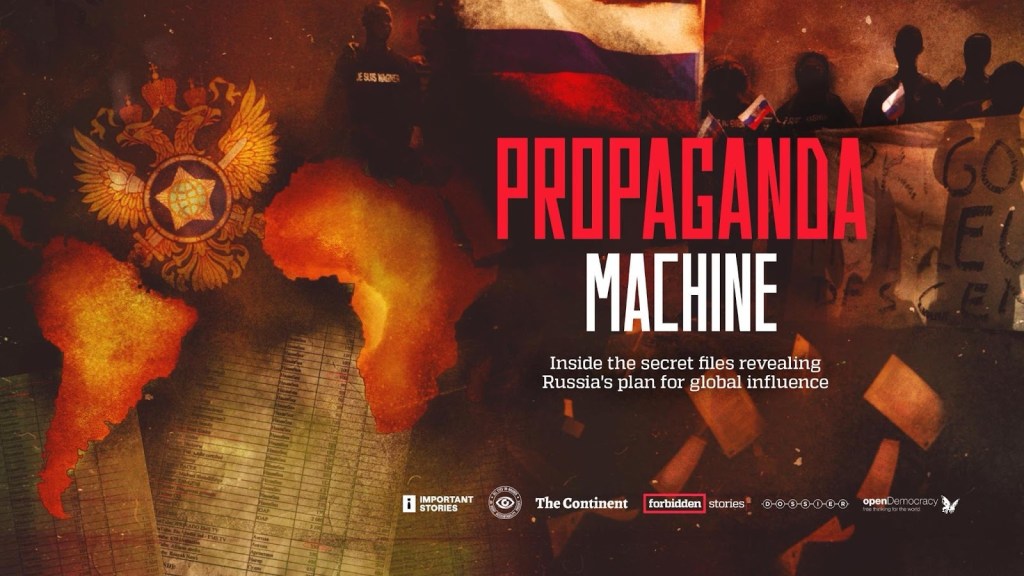
Deprived of its founder since the death of Evgeny Prigozhin, the Wagner Group’s essence has not disappeared. For the first time documents reveal how Prigozhin’s influence empire has been handed over to Russian intelligence. Now directly controlled by Russia’s Foreign Intelligence Service (SVR), Africa Politology, the ex- influence branch of the Wagner group comprised of strategic communication specialists, country experts, political campaigners and social media professionals, is being reorganised and more tightly integrated into a state-led strategy of influence and power projection. Their strategy which INPACT obtained along with media partners targets countries of the Global South with a budget of approximately $750,000 per month between January 2024 and October 2024.
Live and Let Die
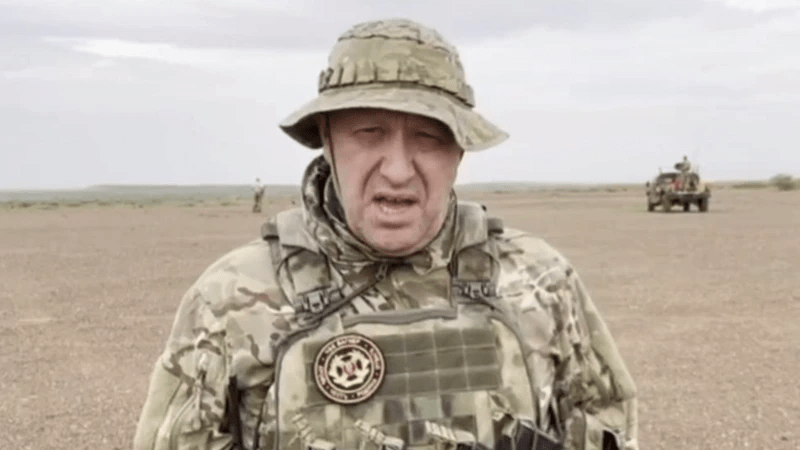
In August 2023, Evgueny Prigozhin reappears on camera for the first time since the failed march he led on to Moscow earlier in June and after being called “a traitor” by Vladimir Putin. A video clip probably shot in Mali is posted on Telegram in which he is fully dressed in combat gear. He announces “We’re working” and adds “The temperature is 50 degrees – just the way we like it. Wagner is making Russia even greater on every continent – and Africa even more free”.
Photos are later released from the Central African Republic where Prigozhin appears with Dimitri Sytyi, a key influence operative of the Wagner Group and historical figure in CAR, in the Russian House in Bangui.
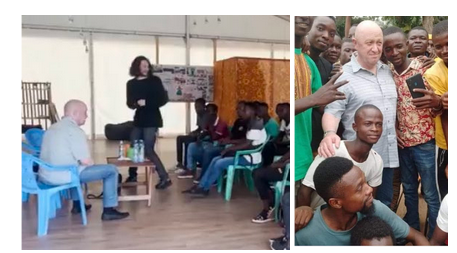
During this trip, Dimitri Sytyi announced a new strategy directed at facilitating Russian business with the opening at the Russian House of a business desk to cater for Russian companies willing to invest in all Africa. Yet this evolution in the influence strategy of the Wagner group may not have been totally a coincidence.
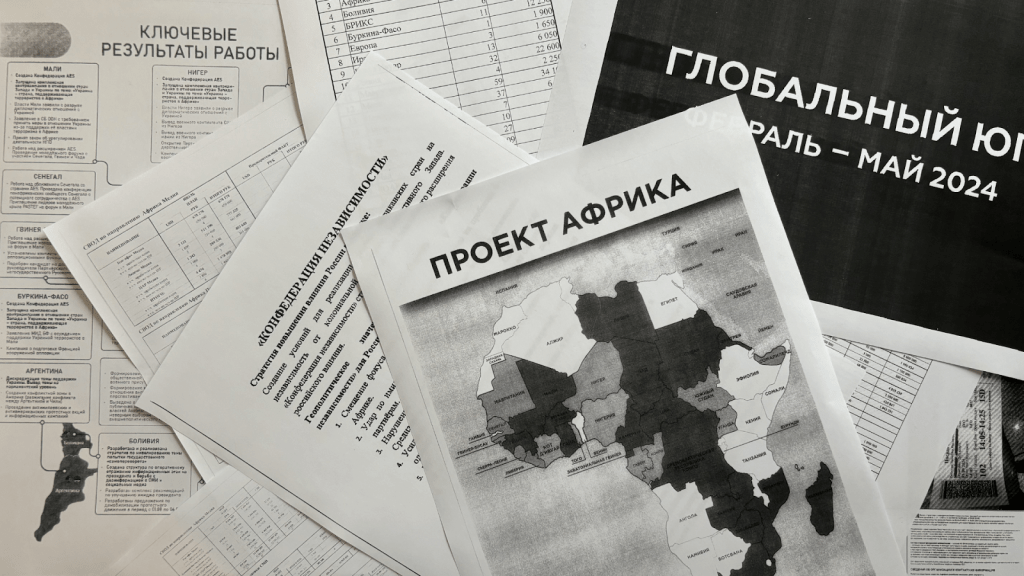
An investigative consortium comprising The Continent, Forbidden Stories, All Eyes On Wagner/INPACT, Dossier Centre, openDemocracy, iStories and several independent Russian-speaking journalists got hold of a document called “Confederation of Independence”. Undated, it refers to events dated end of July 2023 in the past tense and events dated of August 23rd 2023 in the future tense. This strategy document was likely written in August 2023 as Prigozhin was preparing his come-back and laid the ground for a new strategy designed to increase Russia’s influence in Africa. The document states “the Confederation of Independence will become a centre for the further expansion of Russian influence”. The strategy proposes to shift the focus of Western countries’ attention from Ukraine to Africa, to undermine the image of Western countries as reliable military-political partners, to disrupt the US AFRICOM military logistics between the Mediterranean region and sub-Saharan African countries. The document envisions three main outcomes: gain of new allies during voting at the UN General Assembly, opportunities to enter new markets for hydrocarbons, agricultural products, armaments and shaping the international discourse around neocolonialism for France, United Kingdom and the USA. The document cites generously the involvement and assistance of the Russian external intelligence service, the SVR.
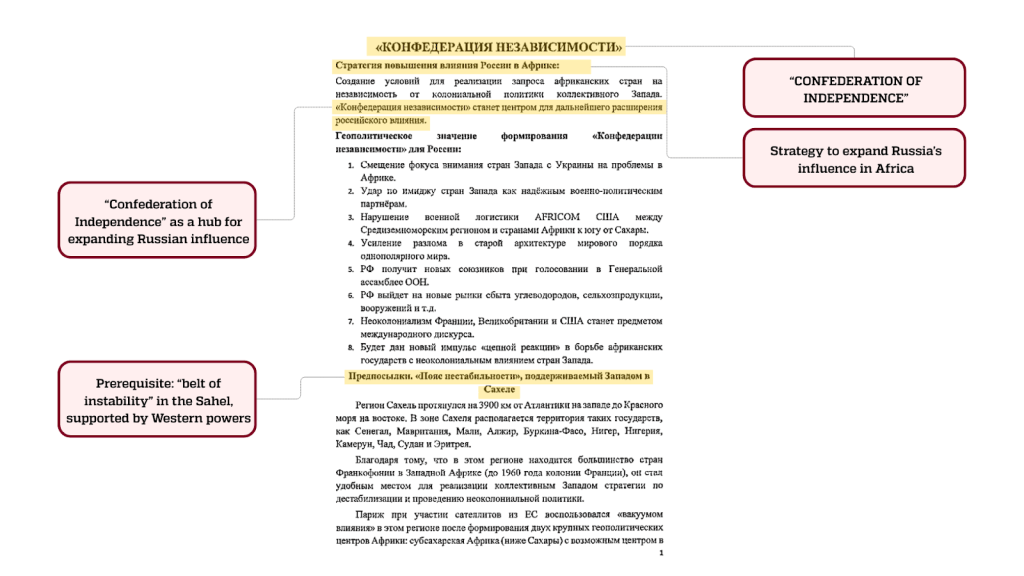
The strategy roadmap is part of 76 internal documents dated from 2023 to 2024 which the editor-in-chief of The Continent, a pan-African media outlet, received from an anonymous source. The documents reference the “Company” – the name used by this network to refer to itself. Throughout the 1,431 pages, our investigative consortium investigated strategic plans, financial budgets, employee biographies, listing of media and consulting products, operational reporting and presentation of disinformation campaigns over several months. Based on the expertise of several subject matter experts and European security sources as well as our own verifications, we were able to confirm the documents authenticity. Ivan Klyszcz, Research Fellow and specialist of Russia in Africa at the International Centre for Defense and Security, was presented with the documents and helped authentify them: “The files show several signs of having been authored by a Russian organisation. The language used is natural and is in the style of internal communications, namely, professional but unpolished for public relations. The formatting of the documents also uses some conventions typical for Russian documents; I have come across similar tables and paragraph formatting looking at government files. Regarding the contents of the files, the picture one gets by going over the files is that of a political consultancy and strategic communications firm. Especially revealing are the country-level strategy documents and the discussions on the Bolivia office, which resembles an exchange to set up a political consultancy and strategic communications office. In the wider context of Russian foreign relations, the countries covered and omitted from these papers suggest that these encompass an important segment of Russian foreign relations, as important portfolios (e.g. Venezuela, Syria) are absent. The level of detail in all these files is remarkable and, if confirmed authentic, it shows a true inside look at some of the most important foreign policy events in recent Russian and West African affairs, namely, the formation of the AES, and Moscow’s role therein”.
On August 23rd 2023, Prigozhin dies in an airplane crash in Russia, likely eliminated by the Russian security apparatus to avenge Vladimir Putin’s humiliation. But his team of Russian spin doctors continue the work alongside the SVR.
Meet Africa Politology, the Company
According to invoices, a key member of the network, Artem Gorniy is paying a rent of 147,912.25 RUB (1915,41 USD) to the Andreevsky Business Centre in January 2024 at this address Bolshoi Prospekt V.O., building 18, Litera A, room 330, 3rd floor St. Petersburg 199034 in St Petersbourg.
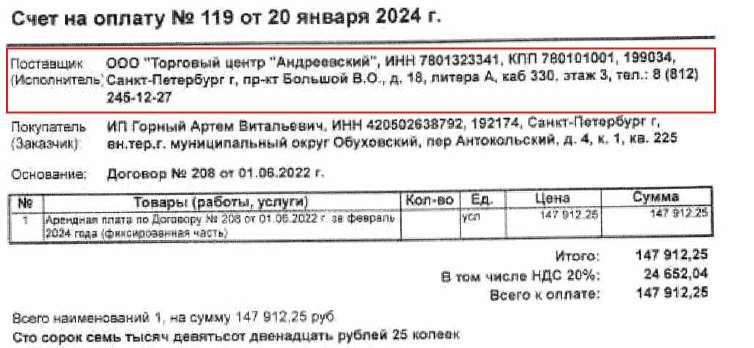
The same address is associated in 2023 by the US Treasury with “Africa Politology” described as developing “strategies and mechanisms to induce countries that promote human rights and good governance to withdraw their presence in Africa and is involved in a series of Russian influence tasks in the CAR and Mali, to include discrediting the UN and carrying out lawsuits against press outlets that report on the consequences of Wagner’s activities. The Department of State sanctioned Africa Politology in January 2023 for acting for and on behalf of Prigozhin.”
Three individuals appear at the head of the network: Sergey Vasilyevich Mashkevich, Sergei Sergeyevich Klyukin and Artem Vitalievich Gorniy. All of them share a common history with Africa Politology at the high of the Wagner Group. All of them worked together in Sudan.
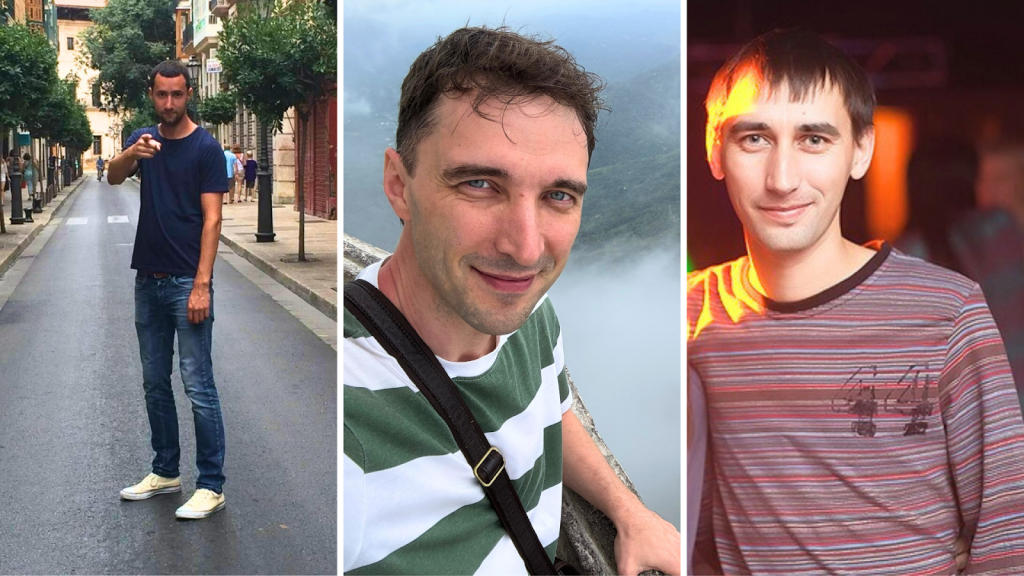
According to Russian databases, Mashkevich used to work at the Administrative Department of the President of Russia from 2015 to 2018. In 2019, he became the head of the Sudanese project of Africa Politology and a high-ranking employee of Prigozhin. He is the central character for Africa Politology. According to a stellar biography included in the trove of documents, he “played a crucial role in stabilising the regime of Bolivian President Luis Arce after the attempted coup in June 2024. He developed the strategy to neutralise the narrative of the ‘self-coup’and coordinated the dispatch of Russian specialists to La Paz”. In Sudan, he met Klyukin who was head of the sociological department for Sudan affairs. Together they worked with Gorniy, listed back then as the deputy head of the Sudan project. In 2024, Mashkevich is the head of Africa Politology, Klyukin has become Head of the Analytical Department, manages 34 experts and since January 2024 ensures the monitoring of 15 countries. Gorniy run the back office of the network back in Russia. All of them are part of Stratconsult LLC, a shell company created in 2024 by Klyukin and used to facilitate some financial flows. Gorniy deposited large cash amounts into the company accounts, records separately obtained by Dossier Center show. StratConsult typically paid in untraceable cash but also used cryptocurrency on at least one occasion documented in the leaked files: paying for a subscription to African Intelligence. In target countries, other operatives are there to deliver the work as shown by copies of plane tickets to Bamako, Johannesburg and Dubai. While many operate in secret, leaked data, public arrests and security sources have enabled our consortium to identify at least sixty employees of this network. By May 2024, the network had reportedly grown to 98 operatives spread across St Petersburg, Africa and Latin America.
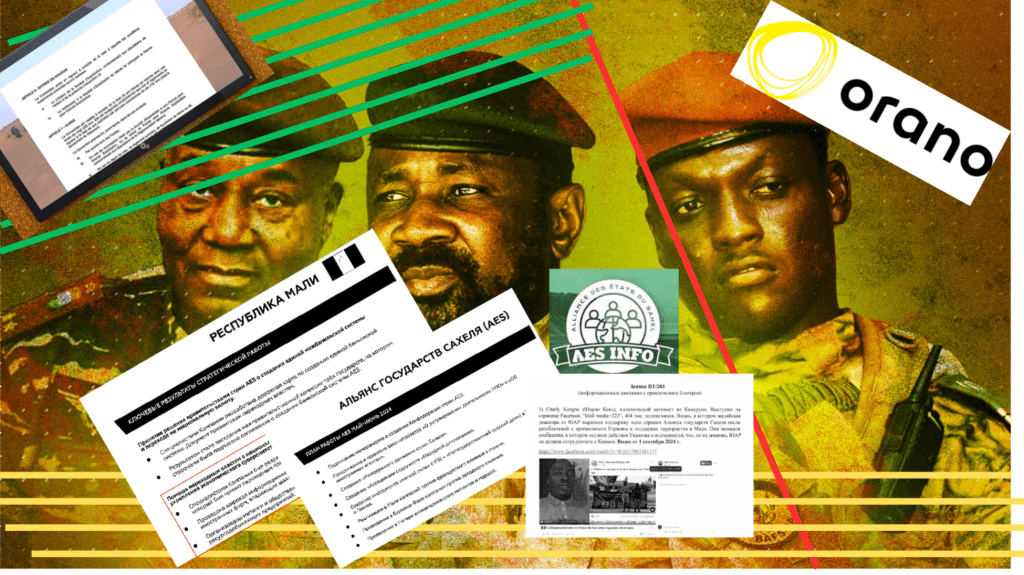
The leaked documents show that Africa Politology has two main activities: “politology” and “media”. The “politology” team focuses on lobbying, public affairs and international relations while the “media” team works on strategic communications, studying public opinions and manufacturing narrative campaigns through fake accounts on social media and websites, buying articles and using influencers. In the documents, the spin doctors report month after month their activities and achievements: organising opinion polls, speaking to key personalities in the countries for consulting, lobbying to shape domestic policies and regulations, especially by promoting an equivalent to the Russian law on foreign agents in some countries or lobbying for the overhaul of the Malian code. In Niger, the Company writes they carried out an operation against Orano, the French uranium company with mining operations in Arlit. The objective is two-fold: discrediting competitors like Western countries or companies and trying to capture new strategic markets like natural resources, energy or minerals. Africa Politology also pays sources in key positions in the governments or in political spheres as seen on a document shared with AEOW/INPACT.
The “media” team works on narrative campaigns to shape public opinions and push key messages into public spheres of target countries. To do so, they rely on various techniques. The leaked documents credit one staffer, Ksenia Valeryevna Soboleva, with purchasing clusters of Facebook accounts and managing the promotion funds for Telegram channels like “Sovereign”, “Arab Africa,” “Galloping Across Africa,” “Algeria Today,” SHARQ, and Abbas Djuma.
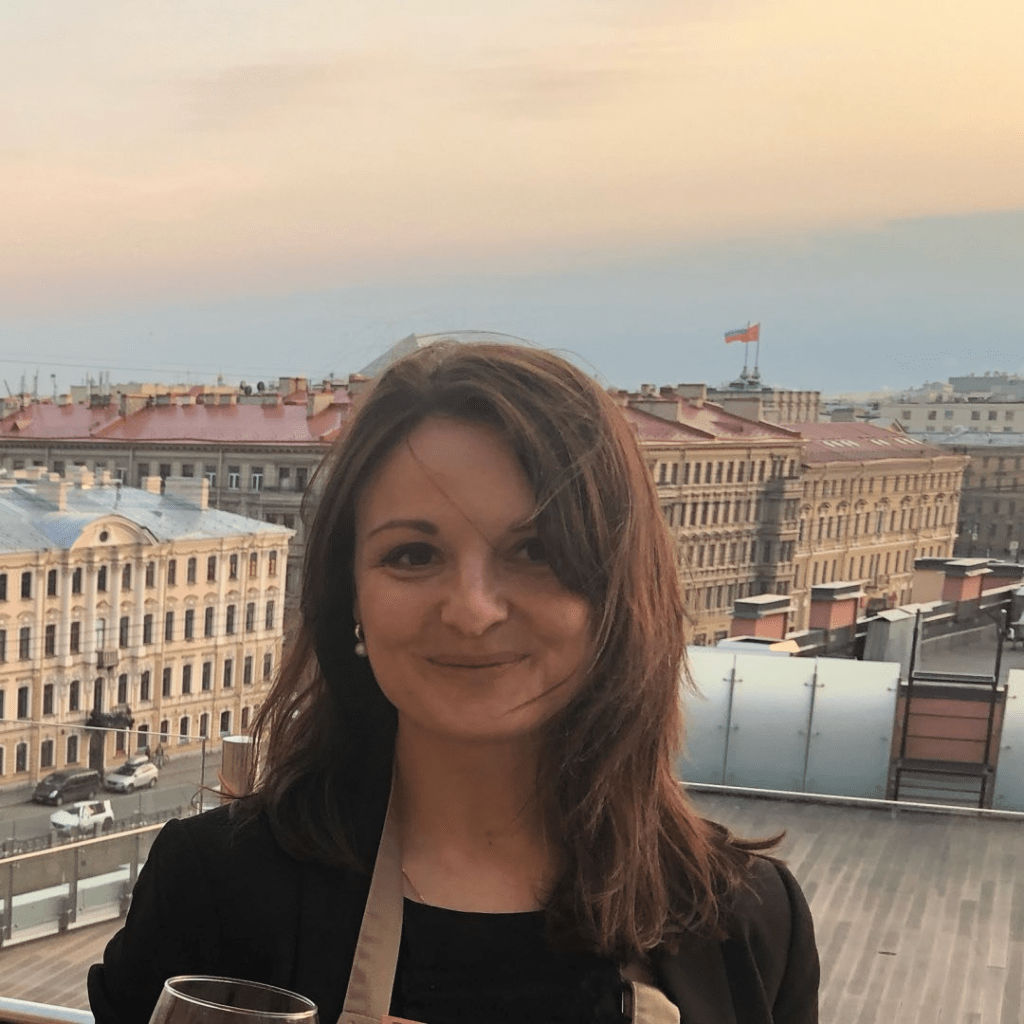
According to the leaked documents, they have paid 340,000 USD for 516 articles, posts and videos across Africa and Latin America in August 2024.
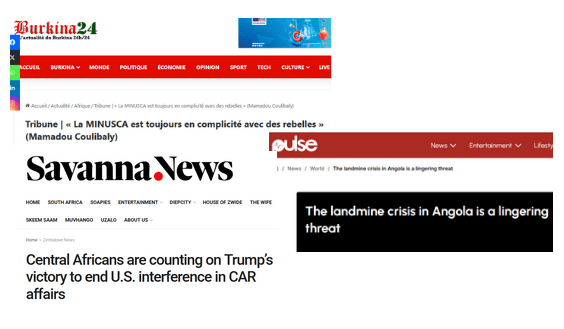
Contacted by the investigative consortium, Pulse Live Kenya, one media on which the Company paid for placing articles, responded by explaining the media “publishes both editorial and commercial content. From time to time, we accept paid posts from clients, often through intermediaries such as PR agencies and communications firms. As is standard industry practice, we do not always have visibility of the ultimate funding source behind such campaigns where they are placed through third-party intermediaries. In this instance, the articles in question were commercial posts. They were disclosed as paid content and were not published as part of our editorial news coverage. Pulse maintains a clear separation between editorial and commercial content and does not permit sponsored material to influence editorial decision-making”.
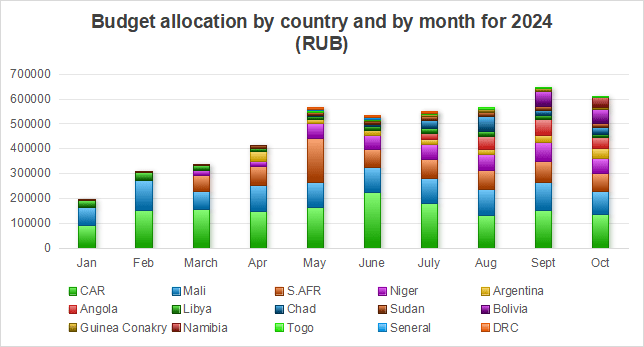
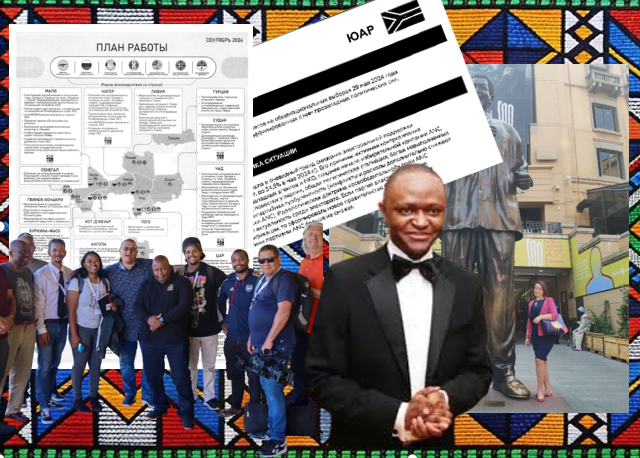
Africa Politology displays a month by month budget amounting over 10 months to 7.2 million USD (660 million rubbles) to carry the work of both the politology and media divisions. The CAR, Mali and South Africa are the priority countries in terms of budgeting while new countries appear in the scope as of April 2024.
SVR, the new cook in chief
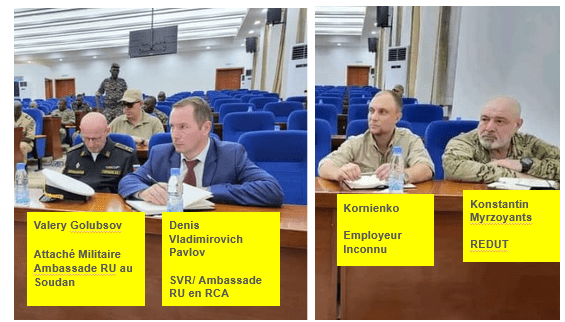
Documents reveal the strong involvement of the SVR, the Russian external intelligence service. As revealed by AEOW/INPACT, SVR officers appear more and more involved in the discussions related to the future of the Wagner Group in key countries where the PMC was established at of the end of the summer 2023. It is the case of Denis Pavlov, a SVR officer who used to work in Europe and who took over the security partnership with the General Directorate of the Central African National Police in September 2023, historically managed by Vitali Perfilev, a key operative of the Wagner Group. Pavlov appears in meetings with the Russian Ministry of Defense and GRU (military intelligence) delegation in CAR in September 2023.
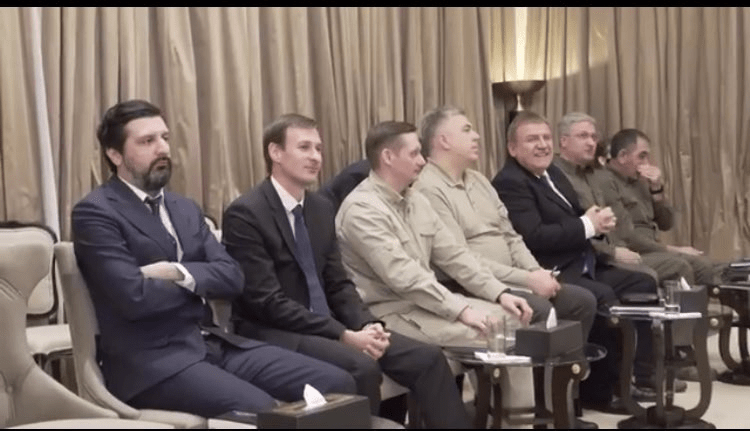
In Mali, another SVR officer appears in a similar delegation in fall 2023. Bagrat Benurovich Shinkuba has been identified as a SVR member by research groups.
The leaked documents give an overview of the SVR involvement to enable the work of Africa Politology in countries. In Mali, the SVR is tasked to provide intelligence to Africa Politology regarding the military and political plans of France and the United States in the Sahel. It is also missioned to provide diplomatic support for the creation of a new military-political union to Mali, Burkina Faso, Niger and the Republic of Guinea, what will be known later as the AES, the alliance of the Sahelian States. In many countries, the SVR is in charge of facilitating the development of trade relations and supporting the promotion of Russia’s interests through Russian companies.
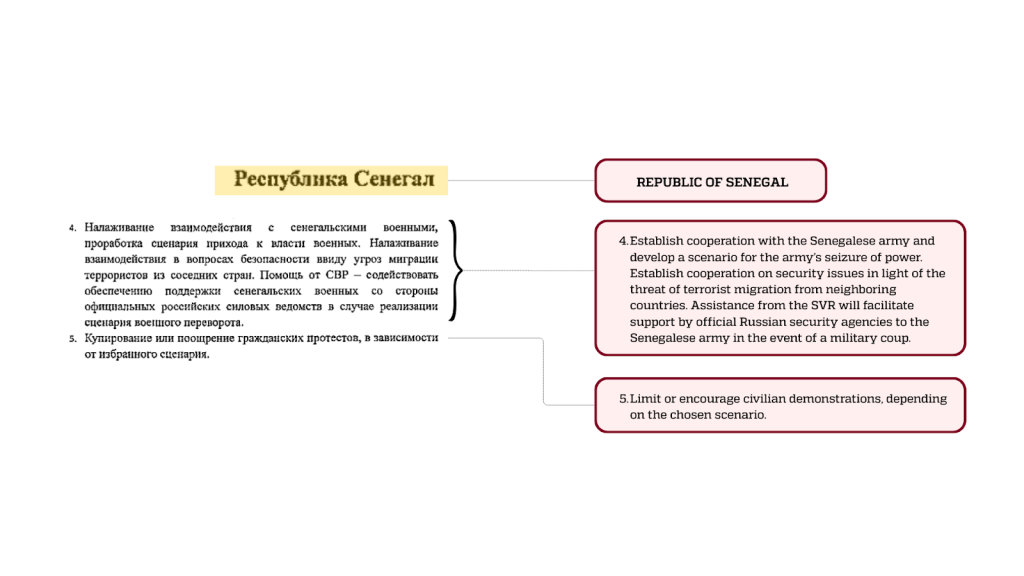
But its role can also be more offensive. In Senegal, as demonstrations have shaken the country, Africa Politology plans for a scenario involving a collaboration with the Senegalese military to develop a military takeover scenario. In this setup, the SVR is requested to ensure the support of official Russian security services to the Senegalese military in the event of a military takeover scenario.
In CAR the SVR is missioned to introduce a Russian expert to the UN Group of Experts on the CAR and to insert a Russian influence agent into the leadership of the MINUSCA to facilitate its withdrawal from the country. They are also in charge of facilitating the implementation of a project to supply Russian fuel to the CAR. In Mozambique, the SVR is missioned to gather information on the activities of US and French “influence agents” as well as on Rwandese business ties with energy company Total and French authorities. In Somalia and DRC, the SVR is tasked to position Russia on security issues by enabling contacts between the Russia Ministry of Foreign Affairs, China and the United Arab Emirates in DRC and by assisting in establishing contacts with the staff of the UN Assistance Mission in Somalia and coordinating the Russian parties involved in the stabilization process in the country.
While all Russian actors appear to work alongside each other to increase Russian influence on the continent, the SVR is also competing in some instances with the Russian Ministry of Defense. In the CAR, the SVR is requested to assist the Ministry of Defense to avoid obstructing members of the Wagner Group operating on the territory. In Libya, the SVR is supposed to ensure the Russian MFA does not interfere with the activities of the Wagner group and the replacement of the Wagner group with other PMCs is not perceived as a Russian intervention by the international community triggering military activities from AFRICOM.
The shift in control occurs fully after Prigozhin’s death. While the SVR was just providing assistance at the time Prigozhin renewed the Wagner influence strategy, the Russian Intelligence Service took over the network later on. According to documents seen by the consortium and European security sources, the SVR took control of Africa Politology at the end of 2023. Africa Politology becomes fully internalised by the security service and delivers the work ordered by the SVR.
No holds barred
What sets Africa Politology apart is the mechanisms used to run relentless campaigns at a global scale. Africa Politology’s strength resides not necessarily in the impact of its campaigns which are difficult to measure but in its ability to beat a constant drum against Western institutions, Ukraine and for advancing solely the interests of Russia. The leaked documents show operational reports and presentations titled “The Global South Strategy”. Africa Politology targets through its actions 34 countries in Africa and Latin America. The global scale of these operations and single point of operational management are the hallmark of the network.
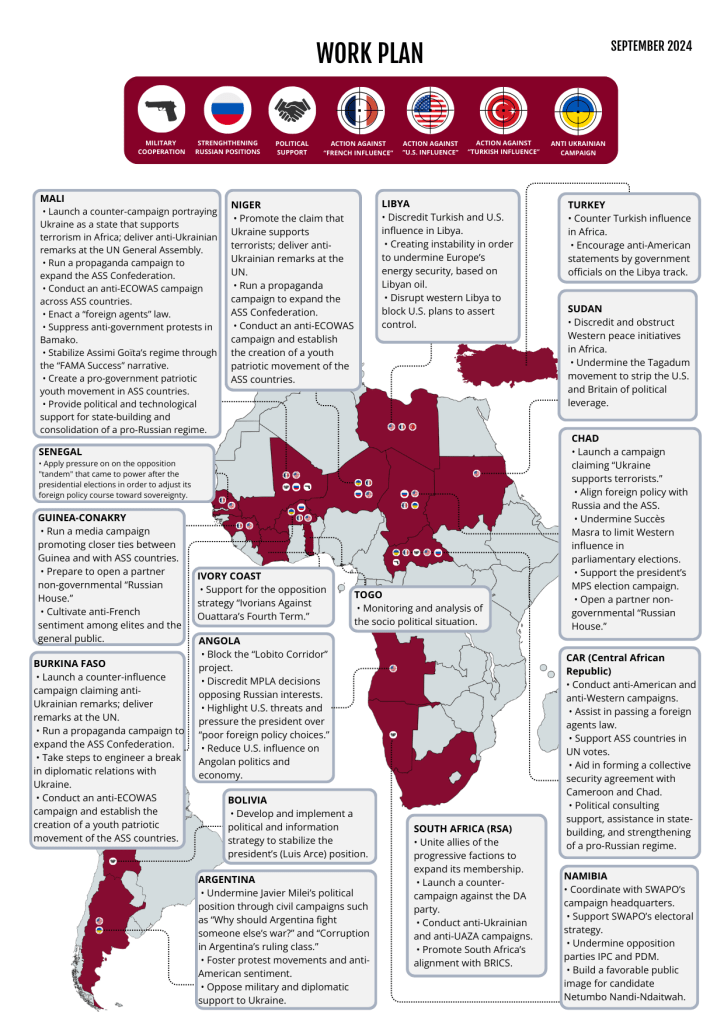
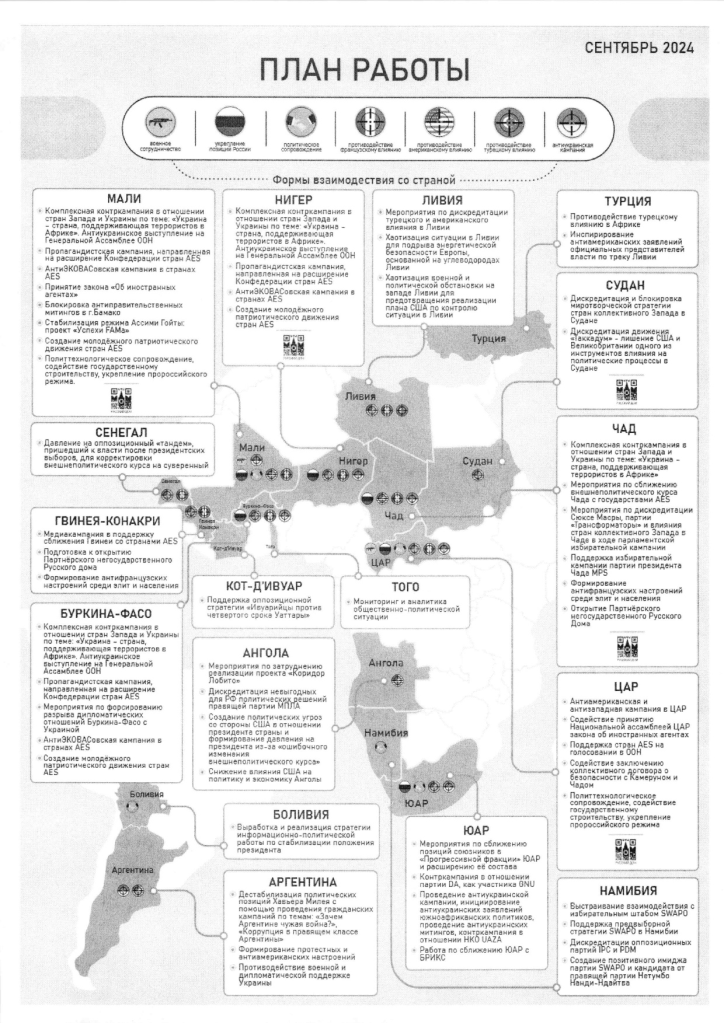
Beyond the regularity of its campaigns, Africa Politology sets itself apart for its offensive methods. It went from the hand of the Kremlin’s first entrepreneur of influence to become one of the operational influence arms of the SVR, mixing strategic communications and espionage to gain advantage over its competitors. There is no holds barred for Africa Politology. The methods are geared towards discrediting Russia’s adversaries in targeted countries, pushing instability and lies, advancing Russia’s economic interests over the creation of balanced partnerships with countries. Documents show how through the work of Africa Politology Russia is using dirty tricks to meddle into domestic politics and put in place a strategy of chaos in conflict-ridden countries where stabilisation mechanisms are challenged like Libya, Sudan and DRC.
A prime example is the ruthless work of Africa Politology in Namibia. The operatives turned their attention to shaping the political narrative ahead of the vote. Their aim was twofold: tarnish opposition figures and reinforce the standing of Netumbo Nandi-Ndaitwah, then the presidential candidate of the long-ruling SWAPO party, in power since independence. To that end, they fabricated a letter they claimed was written by British MP Sarah Champion to Prime Minister Keir Starmer, alleging that London had secretly financed the opposition Independent Patriots for Change. According to internal reports later leaked, the architects of the scheme celebrated what they described as a tangible impact: the U.K.High Commissioner to Namibia went on national television to publicly deny the claim.
In the next episodes of this series, our consortium will deep-dive into how the SVR has organised the take-over of Africa Politology, the profile of the people making these hostile campaigns and will uncover the precise methods used to create campaigns of chaos over the African continent and Latin America. Our investigations will also demystify the SVR propaganda machine which is not always successful and suffers from fatal biaises.

 Investigations with Impact
Leave a comment