
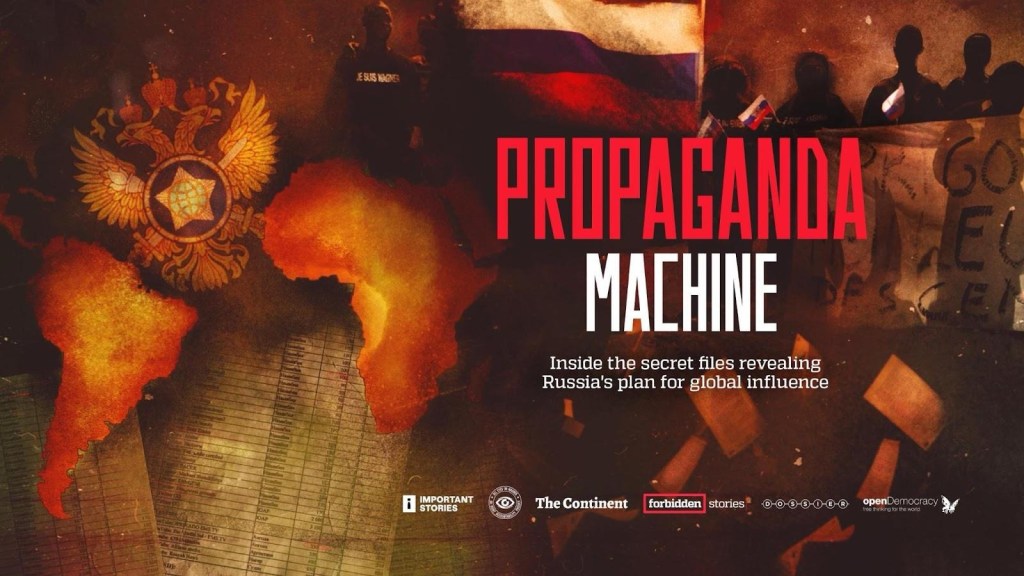
From the battlefield to the newsfeed, Russia has changed fronts. Wagner’s mercenaries have given way to a less visible but equally aggressive force: seasoned political consultants, influence networks and lobbying shops. In Africa, these new foot soldiers of the Kremlin’s narrative aim to lodge Moscow in minds before entrenching it on the ground..
Rybar, African Initiative, Bureau Legint, GR Group—names still obscure to the general public—form the new vanguard of Russian influence on the continent and beyond. All are linked, directly or obliquely, to Russia’s security services. These private or para-state entities have, since 2023, become Moscow’s principal instruments for projecting narrative power in Africa and other strategic theatres.
Wagner laid the groundwork. Through “Africa Politology”—its so-called African Back Office—it professionalised strategic communications and influence campaigns, embedding them in its overseas security offering. The death of Yevgeny Prigozhin and the Ministry of Defence’s takeover reshuffled the deck, dispersing levers of influence in new directions. The private sector now plays a central role in Russia’s soft-power arsenal, blending experienced spin doctors, content agencies and discreet conduits of influence.
These firms are not always state-controlled, but their long-standing proximity to the security apparatus places them in a hybrid ecosystem where national interest and opportunistic contracts blur.
Their mission is simple: to promote the Kremlin’s interests—at whatever cost and by whatever means. Four entities stand out.
Initsyativa 23: African Initiative’s parent company
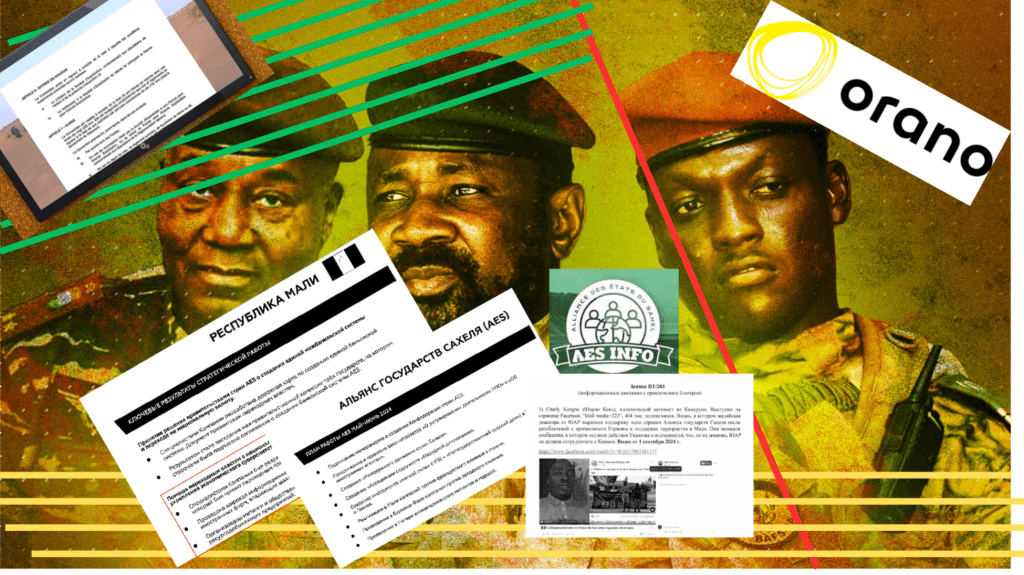
Created in September 2023, Initsyativa-23 is the legal structure that oversees the well-known African Initiative project, an entity presented as a press agency specializing in Africa, but whose actual scope extends far beyond the media. Led by Artem Kureev and reputed to be close to the Russian security services, this platform is, according to information from AEOW/INPACT, closely integrated into the mechanisms established as part of military agreements between Moscow and certain African states. It often operates in tandem with Africa Corps units, currently deployed in Mali, Burkina Faso, Niger, and Equatorial Guinea.
Behind its journalistic veneer, African Initiative acts as a lever of influence in countries targeted by Russia.
The program has spawned local organizations with evocative names—African Initiative Burkina Faso, La Perspective Sahélienne, AFRIN Records, and Ensemble Main dans la Main Niger-Russie—all tasked with promoting a favorable vision of Moscow without undermining African sovereignty.
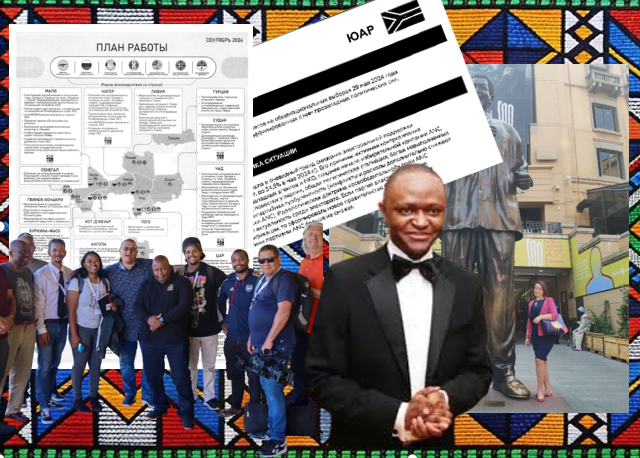
At the same time, the system has forged a network of local alliances with influencers, journalists, NGOs, and media outlets, often paid. According to an AEOW/INPACT source, civil society organizations are contacted by their country’s authorities to be put in touch with a representative of African Initiative. During the meeting, the Russian representative presents himself as an extension of the military agreement signed between Russia and the host country and offers the NGO the opportunity to contribute to Russia’s influence there in exchange for compensation and to introduce it to organizations or individuals likely to produce content favorable to Russian interests. Thus, African Initiative offers compensation for the production of pro-Russian content, organized trips to Russia or Ukraine, and training in exchange for articles and content production for social media or events promoting the Kremlin’s interests. African Initiative has also created campaigns openly hostile to Western powers present on the continent, participating in an increasingly open war for influence. In April 2023, Viktor Lukovenko, who had been a leading figure in the African Initiative, announced the launch of the Central Asian Initiative from Bishkek, Kyrgyzstan. He would be arrested two years later for espionage alongside an employee of the Russian House in Osh.
Initsyativa 23’s brands

GR Group: commercial lobbying for Russian businesses
Founded by Andrey Gromov in 2020 in Moscow, GR Group is a public relations firm offering international lobbying, political consulting, and media project management services in 52 countries, according to its website. Since 2022, GR Group has focused particularly on Africa and Central Asia. But behind Gromov is someone well-known: Yulia Afanasyeva Berg, a former member of Evgeny Prigozhin’s African Back Office and the Wagner Group, and with whom Gromov co-founded the International Business Promotion Center (IBAC). Together, they have participated in various Russia-Africa summits, hosting roundtable discussions.
Based on an analysis of the agency’s Telegram posts, GR Group appears to be pushing economic interests in Africa in the construction sector, with Yulia Afanasyeva Berg acting as an advisor to the president of NOSTROY, an organization representing the interests of the construction sector, and in the energy sector and Rosatom, with specific organizations in which the agency is directly involved: IBAC (International Business Acceleration Center) led by Yulia Afanasyeva Berg and ARÉA (Afro-Russian Energy Association) led by Andrey Gromov. Through IBAC, Yulia Afanasyeva Berg is trying to lobby the Russian and African SME sector to foster partnerships, but is also traveling to Togo, Tanzania, and other African countries to support the Russian renewable energy sector there. This is an interesting point because, according to several of our sources in the Sahel, Western companies have recently found themselves in difficulty, particularly on renewable energy projects, due to strong Russian lobbying. AREA’s mission is very clear: to build a Russian energy platform in Africa by lobbying to create markets with favorable conditions for Russian companies. Historically, Russian business interests have been championed by Afrocom, an organization close to the SVR, Russia’s foreign intelligence service.
GR Group, along with Yulia Afanasyeva Berg, was one of the organizations and individuals involved in the recognition of the Taliban government in Afghanistan in December 2023.
GR Group’s brands

Bureau Legint – the GRU’s business front
In September 2023 in Mali, just after the death of Yevgeny Prigozhin, Viktor Boyarkin sat in the second row of an official Russian delegation led by Deputy Defense Minister Yunus Bek Yevkurov and the head of GRU special operations, General Andrey Averyanov.


The participation of Boyarkin, a former GRU officer who served oligarch Oleg Deripaska, in this meeting, alongside Mirzayants, one of the leading figures of the Redut PMC, is noteworthy: his employer, Deripaska, is cited as one of Redut’s alleged backers.
Since 2018, the GRU (4th Directorate) and the FSB’s International Service (5th Directorate) have been reactivating former Soviet networks, creating business associations and consulting firms. Among them, Bureau Legint, with an annual budget of approximately $1 million, was co-founded by Viktor Boyarkin, a former GRU officer, and his wife Tatiana, a former accountant at GRU headquarters. Boyarkin has extensive experience in Africa and is a former graduate of the GRU Military-Diplomatic Academy. A key player in the Soviet evacuation of Yemen in 1986, he then served as an agent at the Russian embassies in the United States and Mexico until 2003. He subsequently joined Almaz-Antey to sell naval vessels to Africa. In 2005, he headed Oleg Deripaska’s security detail and orchestrated operations to neutralize strikers at a bauxite mine in Guinea, orchestrating the replacement of officials deemed hostile with individuals loyal to Moscow. In 2006, he intervened in Montenegro to influence a pro-Kremlin independence referendum. To mask his operational role, Boyarkin delegated Legint’s public appearances to Anastasia Samarkina (a distant relative of his wife), whom he appointed CEO. She became prominent in diplomatic circles—receiving ambassadors, attending international forums, and signing memoranda with major state-owned companies.
Boyarkin also founded the Association for Economic Cooperation with African Countries, in partnership with the Russkiy Mir Foundation. Since 2023, this organization has been running a program entitled “Russia–Africa: Friendship across Years and Distances,” involving public figures such as cosmonaut Sergei Kud-Sverchkov, who has been sent to several countries (Senegal, Mali, etc.) to promote “Russian values” and friendship with Russia.
He also created a Business Advisory Council for Libya. Its executive director is Yevgeny Sosonkin, an officer in the FSB’s 5th Directorate. This council allows for the expansion of intelligence residencies in the Middle East. Sosonkin is mentioned as responsible for the Legint Bureau’s economic relations, notably during the Russia–Africa summit. The Legint Bureau focuses primarily on Libya through its communications channels.
Bureau Legint’s brands

Rybar: the military-media complex
Rybar LLC (also known as Rybar, Rybar OOO, or Project Rybar) is a Russian media organization founded by Denis Shchukin and Mikhail Zvinchuk. Originally a simple Telegram channel launched in 2018 to cover international conflicts, Rybar has since grown into a highly influential pro-Kremlin platform with over 1.3 million subscribers on Telegram. The platform broadcasts military and geopolitical content on Telegram, VK (a Russian social network), and RuTube (the Russian equivalent of YouTube).
Rybar, which publishes analyses and monitors the war in Ukraine from the Russian side, is also frequently used as an information hub and amplification chamber to launch major campaigns, particularly against French companies that aim to reach diverse audiences outside of the Ukrainian theater.
The project was initially funded by Yevgeny Prigozhin (now deceased), the Russian oligarch in charge of the Wagner Group. Rybar works for the Russian Ministry of Defense and is financially supported by Rostec, a Russian state-owned defense company sanctioned by the United States since June 2022. Rybar and its founders have been under international sanctions since 2023 and are the subject of a reward offer from the U.S. Department of Justice.
In September 2023, Rybar launched an OSINT curriculum at Synergy University in Moscow to train communicators and content creators in the use of OSINT to enrich their productions. The Rybar school then targeted Kazakhstan, Kyrgyzstan, Uzbekistan, and the Balkans, key areas for current Russian influence objectives.
The platform entered a third phase of expansion a few weeks ago with the creation of channels dedicated to Africa (AFRIKAR) and Central Asia (TURANAR), priority areas of Russian interest outside of Ukraine and Europe. The entire platform has a column on the SOLOVIEV Live channel, named after the Russian presenter who spearheaded the media’s support for the Kremlin’s war in Ukraine. RYBAR does not hesitate to critically discuss Russia’s strategic competitors, particularly the French, and serves as a pivot for igniting the Kremlin’s influence campaigns.
RYBAR’s brands

Wagner is gone, but Russian influence has never been more agile. Make way for spin doctors, lobbying agencies, and shadowy strategists. Rybar, African Initiative, Bureau Legint, GR Group… Behind these still-confidential names lies the Kremlin’s new inner circle. Their weapons: calibrated propaganda, expertly cultivated local networks, targeted smear campaigns. Their method: slipping into the cracks of economic, cultural, or military cooperation, until they shape the dominant narrative. After the mercenaries, here come the state influencers—discreet, adaptable, and fearsomely effective. A war without uniforms, but with the same objectives: gaining ground, in people’s minds as well as on the map.
 Investigations with Impact
Leave a comment