
Seeing an entire unit destroyed and captured by Northern Mali separatists marks the end of the myth of Wagner and the elite Africa Corps unit serving Russia’s foreign policy. After the symbolic capture of Kidal for both Wagner and the Malian Armed Forces (FAMa), it is clear that the moral and tactical value of Wagner’s men does not match the propaganda videos used for recruitment. Thanks to exclusive documents retrieved, we dive into the organization of Wagner in Northern Mali.

Thousands of kilometers from Russia, lying among the corpses of his comrades, a shirtless Russian fighter rebels against yet another beating to check if he is dead. The man gets up, runs, and throws stones at CSP or JNIM fighters. Surprised, they eventually shoot him down. A strange war for this Russian who will never see his family again.
What is the common point between Nikita “Belyi,” the blogger of the famous Russian Telegram channel Greyzone, Serguey “Prud,” a former special police forces member, or Igor “Chachlik,” Dmitri “Rysam” or “Vara,” and Alexey “Bari,” veterans who have already fought in Libya, Syria, and the Central African Republic for Wagner? Tin Zaouatine will be their grave in the name of a defense partnership between the Malian junta and the Kremlin.
Gold Rush
Although Russia justified its operations against separatist forces in Mali within its security agreement with the Malian government, Wagner has had a clear ulterior motive since 2021: accessing the country’s plentiful gold reserves. This is convenient as Mali is rich in gold, especially in the artisanal mining areas in the north. A strategic area that has not escaped Wagner, which is trying to control the artisanal gold mines between Gao and Kidal. The latter is directly adjacent to gold deposits exploited by Tuareg factions in northern Mali.
The capture of the city in November 2023 by Wagner had its sights set on these deposits, as shown by the map presented below.

Figure 01: Overview of mining sites in Mali, correlated with incidents involving Wagner, surveyed after April 2023 – ACLED data, AEOW map
For the CSP (and JNIM), in seeking to control the last cities in Northern Mali, FAMa and Russian mercenaries have entered the historic Tuareg sanctuary in the Adrar des Ifoghas. Organized in a pyramidal format with the Ifoghas faction at the top, the Tessalit-Boughessa-Tin Zaouatine-Tin Essako-Kidal quadrilateral hosts the camps of many families of CSP leaders and fighters. Tin Zaouatine, on the Malian side, includes several gold panning sites under the control of these same leaders, ensuring them comfortable incomes.
Wagner’s control of these sites is clearly an opportunity to take over one of West Africa’s most prolific sites, with existing installations and several nearby airstrips to export raw or roughly refined ore. This mirrors what was done in Sudan.

Figure 02: Overview of gold-panning sites in the MALI-ALGERIA border zone, TIN ZAOUATENE locality
An Ambitious Operation Far from Northern Mali Realities
Starting with a reconnaissance at In Afarak from the Tessalit base on July 20, 2024, FAMa and their Russian allies awakened the entire military and political apparatus of the CSP, as noted by many supporters of the independentist movement uniting the Arab-Tuareg movements. Alghabass Ag Intallah himself will command operations on the ground, which was not the case for the capture of Kidal.
In Afarak is a border town serving both merchants and traffickers, a stopping point before crossing into Algeria or heading to Northern Mali cities. Despite victorious announcements from DIRPA of total control, FAMa and Wagner encountered no resistance and left the town after their passage.
Meanwhile, another element left Tessalit to first recon Boughessa and then, via the Achibriche wadi, attempted to approach Tin Zaouatene on the Malian side from the west and south on July 23, 2024. The column was targeted by an IED attack, confirmed in various Russian Telegram channels.
CSP troops began positioning to target the FAMa/Wagner vehicle column from July 25, then on July 27, 2024. Caught in an ambush straight out of the infantry combat manual, FAMa and Wagner scattered and sought to flee south. Unaware that they had entered a path trapped between two terrains, the column found itself under fire from JNIM to the south and CSP to the north. A helicopter was dispatched from Kidal, likely to evacuate the wounded. This aircraft, targeted, made a “hard landing” just before the former Minusma camp in the Aliou neighborhood of Kidal.

Figure 03: Chronology of the FAMa / Wagner operation and the various attacks carried out by the CSP and JNIM. – Source: AEOW

Figure 04: Chronology of the FAMa / Wagner operation and the various attacks carried out by the CSP and JNIM. – Source: AEOW
These battles quickly turned to the CSP’s advantage, both due to the tactics implemented and the terrain’s characteristics: natural cover from the terrain, a mix of soft sand and rocky soil making vehicle progression difficult, and a sandstorm.
In total, according to multiple cross-referenced reports and consulted sources, between 50 and 67 Russian mercenaries and about ten Malian soldiers were killed in this battle. A quantity of war material was recovered by CSP and JNIM, each communicating about this symbolic loot. CSP announced 84 dead on Wagner’s side “countable” in its statement. For comparison, about a hundred fighters (high estimate) were killed in Syria in 2018 by the international coalition during the battle of Kasham. Mali becomes one of the group’s biggest debacles in Africa.

Figure 05: Booty claimed by a CSP combat platoon – Source: URL
Discovery of Wagner’s Order of Battle in Northern Mali
Following a call on social networks, AEOW recovered confidential Russian documents on the battlefield and is able to outline Wagner’s organization in Northern Mali. Thanks to these documents, AEOW reconstructed Wagner’s military units involved in the action, identified some individuals by their call-sign and serial number, and knew the types of vehicles used.
Wagner’s setup in Northern Mali relies on intelligence, support, and combat units.

Four intelligence units with 25 men per group are stationed in Tessalit and Kidal, with a total of 100 men assigned there, and two drone units are located in Anefis and Tessalit. Additionally, there are two air defense units in Kidal and three support units (one of which recently recruited for Belarus) in Aguelhok and Kidal. Three or four combat units are positioned in Anefis, Kidal, and Aguelhok.
Among these, two or three groups from the 13th Assault Detachment under the direction of “Prud,” identified as Serguey Shevchenko on russian telegram channel, which we identified as Serguey Nechaev, a former SOBR (Special Rapid Response Units) of the National Guard “Rosgvardia.” He was a section leader in Libya and Syria for the Wagner group.

Figure 06: General map showing the locations of the various Africa Corps units by base – Source: AEOW
Wagner Group Veterans End Up in Northern Mali
Some of these fighters have been identified with their roles and service records. It is evident that some have already served in Syria, the Central African Republic, and Libya.
The most famous of them, Nikita Fedyanin, is the administrator of the Telegram group Grey Zone, created years ago to support Wagner’s communication and document the campaigns of these new mercenaries. According to several media outlets, he participated in Wagner’s campaigns in Syria and Africa.

Figure 07: Nikita Fedyanin found dead in Tin Zaouatine.
Since July 23, 2024, the Grey Zone Telegram channel has not been updated, confirming his death on site. The last message was a photo of Wagner members in an armored vehicle in the Sahel.

In the confidential documents received, AEOW identified some Wagner group members associated with vehicles.
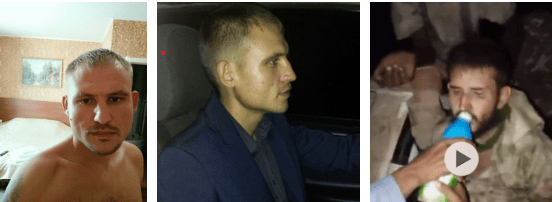
With serial number 1381, we identified Denis Anatolevich Dmitrov with the call-signs Pekhota or Gurokhen. A former infantryman, he previously served in Libya and Syria for the Wagner Group. He is part of the combined artillery group. He might be the individual captured.
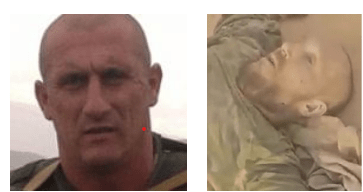
Dmitry Olegovich Boud, serial number M-0123, alias Volchok, is a former Ministry of Defense member. He previously served in the Central African Republic and Syria for the Wagner group as a support group leader. In Mali, he had a certificate indicating to whom his salary should be transferred in case of death. Based on circulating images of the dead, this individual resembles him and could have perished.

While the bodies of Russian allies mostly reveal young faces, AEOW identified other individuals through documents recovered on site. These are primarily veterans of the Wagner group. They all spent time in multiple African or Syrian campaigns.

Figure 08: Summary table of information contained in notebook pages found in the combat zone – Source: AEOW
What Next After This Crushing Defeat?
Several questions remain unanswered. The first concerns the fate of the Russian prisoners.
Several Russian Telegram channels seemed to mobilize to pay USD 25,000 per prisoner. Others mentioned possible transfers to Ukrainian authorities.
Some Telegram channels, such as the “Rusich Special Reconnaissance and Action Group” DHSRG, a Russian PMC operating notably in Ukraine, openly proposed sending elements to Mali to attempt a hostage rescue operation.

Figure 09: Image of one of the Russian mercenaries detained by the CSP. Source: URL
A possible disinformation campaign aimed at involving Ukrainian military intelligence services has been launched on Telegram. Although contacts and possible small-scale training sessions are taking place, convincing the public that Ukrainian intelligence services are fighting alongside the Tuaregs would allow the Kremlin to mitigate the recent defeat’s weight on Malian soil while complicating Ukraine’s diplomatic position.
The annoyance on Wagner and Africa Corps networks on social media is evident. Amid calls for a minute of silence, there are harsh criticisms of the Malian Armed Forces, accused of abandoning their Wagner allies when the situation turned against them.
As Wagner and the Africa Corps will likely be forced to observe an operational pause and review their order of battle, the impact on Sahelian juntas’ stance towards their services and their confidence in the “Russian instructors” sent to support them remains to be evaluated, especially given the monthly cost.


 Investigations with Impact
Leave a comment